AED 800
Solo or 2 persons


 Destination
  Verified
  Musandam tour packages
The hardest trail in Musandam. 6 to 7 hours, rocky terrain, fjord views from the summit ridges on both sides.
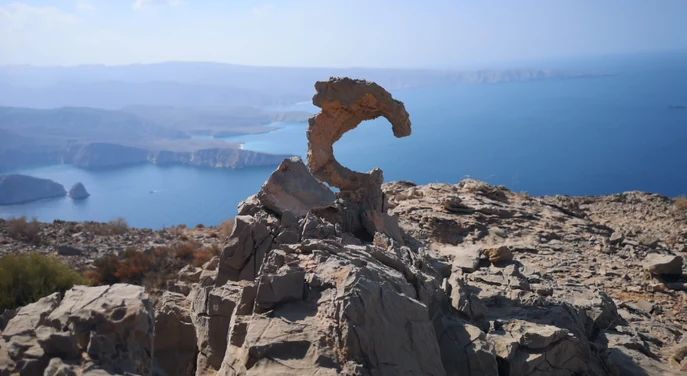
The Jebel Sham trekking route climbs from the Khasab road through the upper Hajar limestone onto the summit ridges where Khor Habalayn and Khor Sham are visible simultaneously. The terrain is rocky and exposed. There is no path as such: the guide reads the mountain. Six to seven hours return. Trekking experience on mountain terrain is a genuine requirement, not a caution.


Solo or 2 persons
3 to 10 persons
11 persons and above
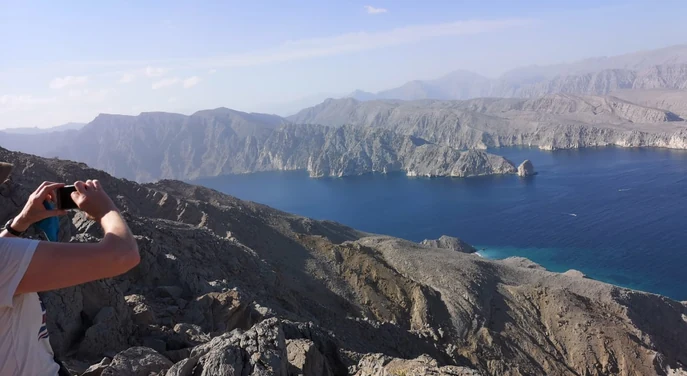
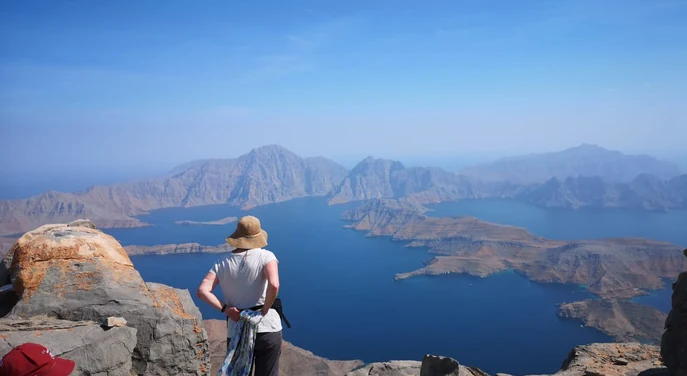
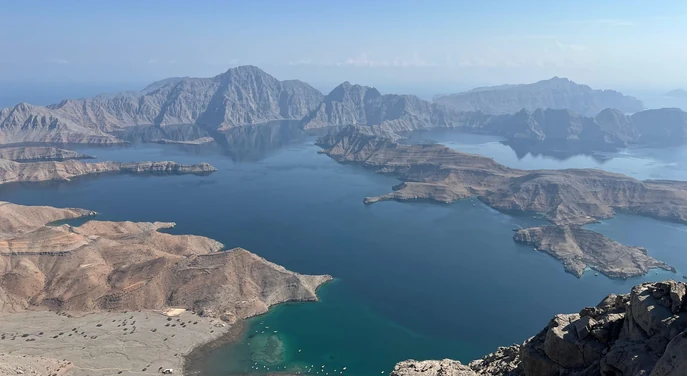
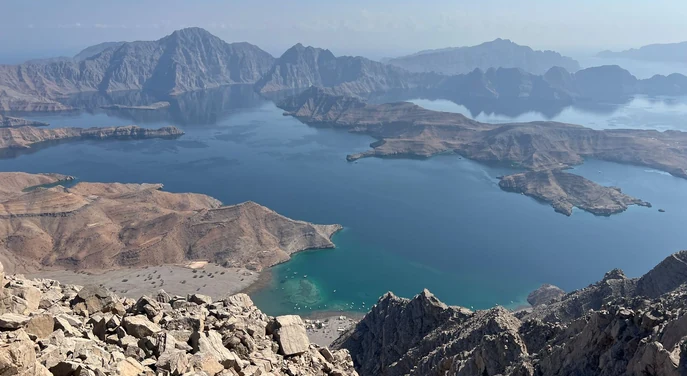
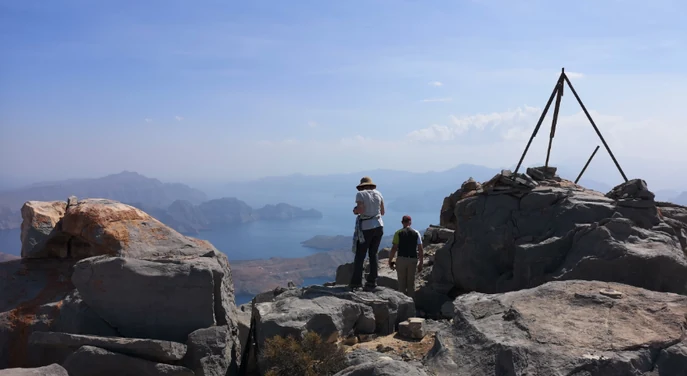
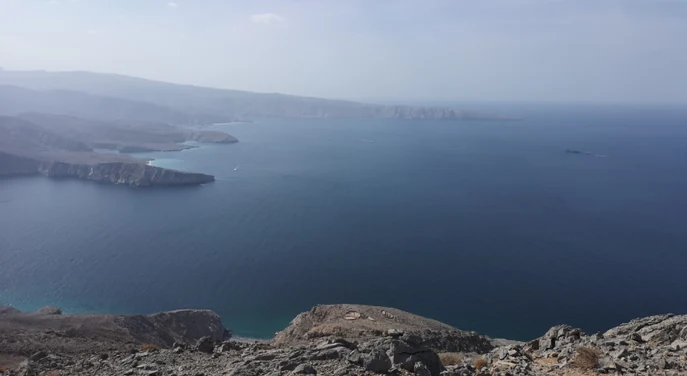
From the Jebel Sham summit ridges, the two longest fjords in Musandam, Khor Habalayn and Khor Sham, are visible at the same time. The mountain drops on both sides. The Gulf of Oman is open to the north. The Strait of Hormuz is visible in clear weather. There is no other point in Musandam where this geometry is available to a walker.
The Jebel Sham ridges give simultaneous views of Khor Habalayn and Khor Sham, the two longest fjords in Musandam.
No formal path. The guide navigates by knowledge of the mountain. Full mountain trekking experience required.
Dates and Arabic coffee served at the summit rest point.
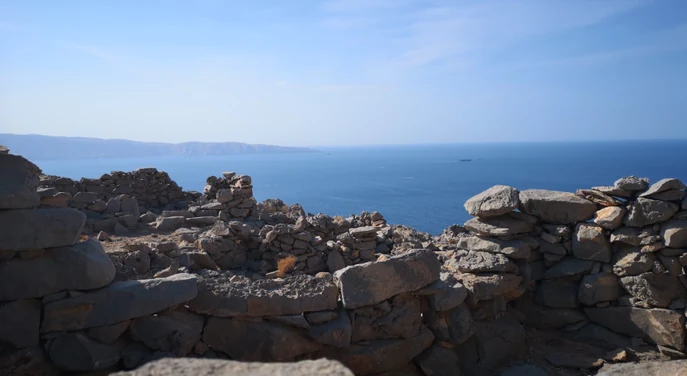
On clear days, the Strait of Hormuz is visible from the summit: the 33-kilometre passage between Oman and Iran.
The Jebel Sham trek is for experienced mountain trekkers. If you have done multi-hour hikes on rocky terrain without a marked path, this is the right level. If the Wadi Ain waterfall trek would be a stretch, this one will be harder. The terrain is exposed limestone above the treeline with no shade for most of the route. The guide is a local who has walked this mountain for years; route-finding is not the guest's responsibility, but physical fitness is.
If you want views from the mountain with less physical demand, the Jebel Harim 4WD safari reaches a viewpoint at nearly 1,784 metres by vehicle. The full day safari adds the Wadi Ain trek. Neither requires the fitness level that Jebel Sham demands.
| Group size | Price per person | Includes |
|---|---|---|
| Solo or 2 persons | AED 800 | 4WD to trailhead, local guide, Arabic coffee at summit |
| 3 to 10 persons | AED 600 | 4WD to trailhead, local guide, Arabic coffee at summit |
| 11 persons and above | AED 500 | 4WD to trailhead, local guide, Arabic coffee at summit |
Physical fitness: The trek is 6 to 7 hours on rocky, uneven terrain with significant elevation gain. It is not suitable for guests without prior mountain trekking experience, for children, or for guests with cardiovascular conditions. If you are unsure whether the route is appropriate, message us and we will advise honestly.
Shoes: Trekking boots with ankle support and a rubber grip sole. Trail runners are acceptable only if they have a proper lug sole. Sandals, trainers and flat-soled shoes cannot be used on this route. Shoes are not provided.
Water: Bring at least 2 litres per person. The mountain has no water points. The guide carries emergency supplies but guests are responsible for their own hydration.
Clothing: Lightweight long sleeves for sun protection. A windproof layer for the exposed summit ridge. Sunscreen and sunglasses are essential.
4WD from Khasab to the trailhead.
Guide briefs the group. Check footwear, water and kit.
Ascent through the lower Hajar limestone on rocky ground.
Upper slopes, increasing exposure. The mountain opens up.
Summit ridge with views of Khor Habalayn and Khor Sham simultaneously. Arabic coffee and dates.
Descent on the same route. The rocky terrain requires concentration on the way down.
Return to trailhead and 4WD back to Khasab.


AED 800 per person for 1 to 2 guests, AED 600 for 3 to 10, and AED 500 for 11 or more. A local guide and 4WD to the trailhead are included. Lunch, water and trekking shoes are not provided.
No. The trek is 6 to 7 hours on rocky, uneven, exposed terrain without a marked path. Previous mountain trekking experience is a genuine requirement. If you are looking for a mountain experience that does not require trekking experience, the Jebel Harim 4WD safari reaches a viewpoint at nearly 1,784 metres by vehicle.
Trekking boots with ankle support and a rubber lug sole are the minimum. Trail runners with a proper grip sole are acceptable. Sandals, trainers and flat-soled shoes cannot be used on this route. Shoes are not provided.
At least 2 litres per person. The mountain has no water points and the trek takes 6 to 7 hours. In summer months (May to September), 3 litres is advisable.
Last updated 5 August 2026

Tell us your travel date, group size and trekking experience. We will confirm the route and start time.
WhatsApp us