




The best stargazing spots in and around Abu Dhabi
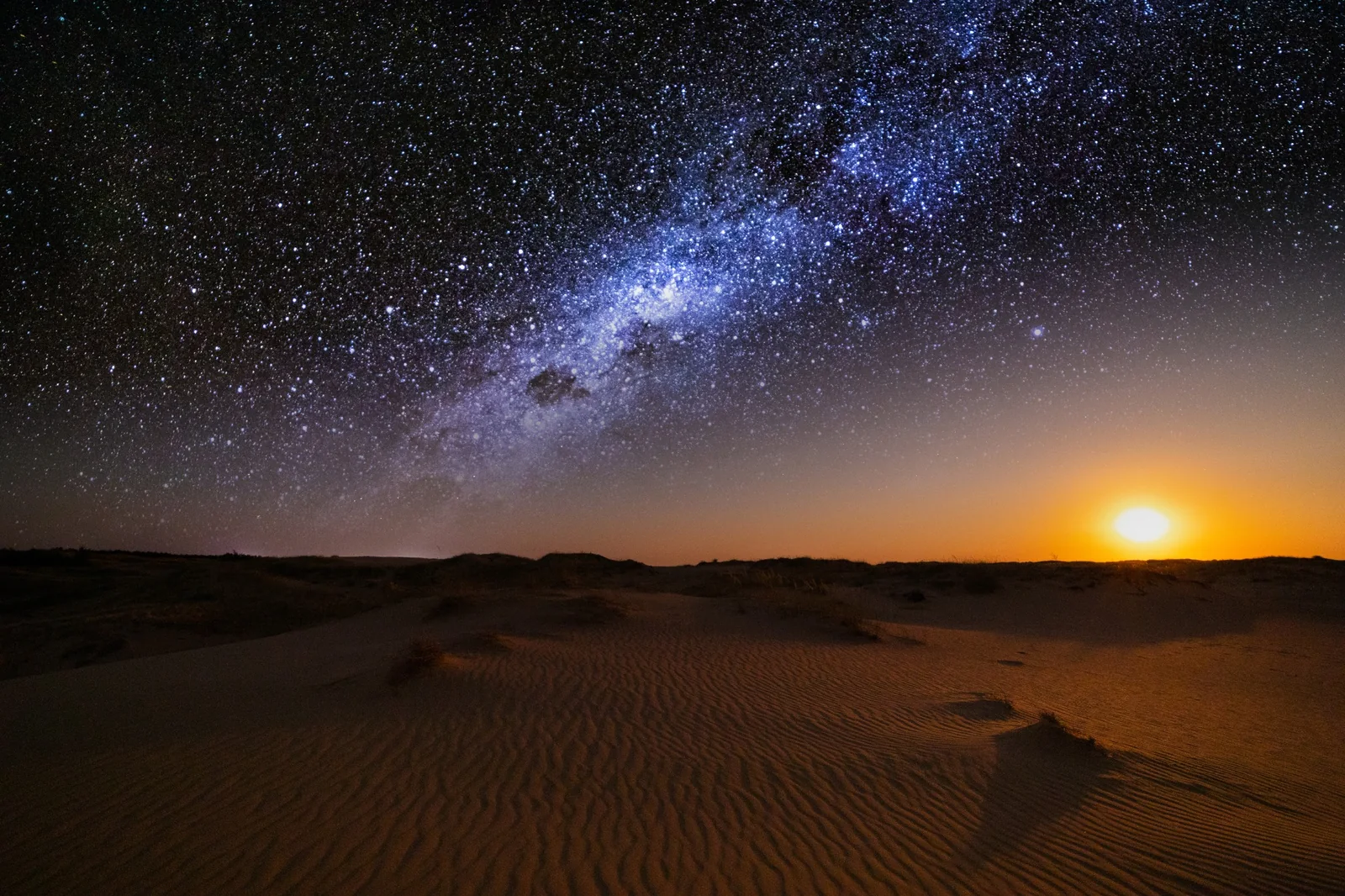
Light pollution decides everything in stargazing, and the rule is simple: the further you get from the city glow, the more the sky opens up. These are the sites we use and recommend, ordered by how dark they truly get.
Al Quaa Milky Way Spot
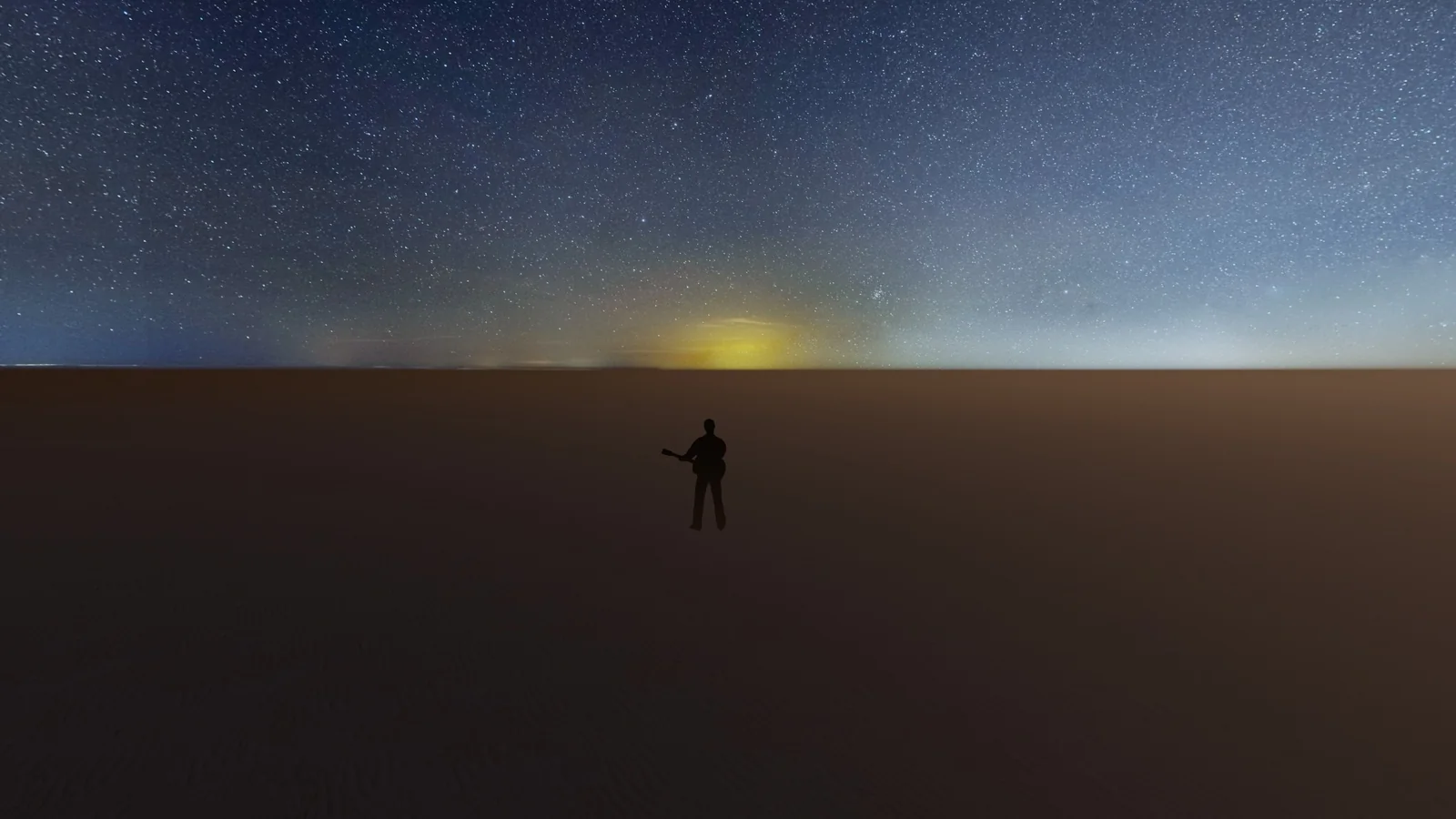
Deep in the desert south of Abu Dhabi on the route towards Al Ain, Al Quaa sits far enough from every major city that the Milky Way is visible to the naked eye on clear, moonless nights. Dubai Astronomy Group's lead astro-tourism specialist has publicly named it the top stargazing site in the UAE. There are no facilities on site, which is exactly why it stays dark: come self-sufficient, or join a guided Al Quaa overnight camp and let the camp come to you. For timing your visit, our guide to the best time to visit Al Quaa Milky Way Spot breaks it down month by month.
Al Wathba desert
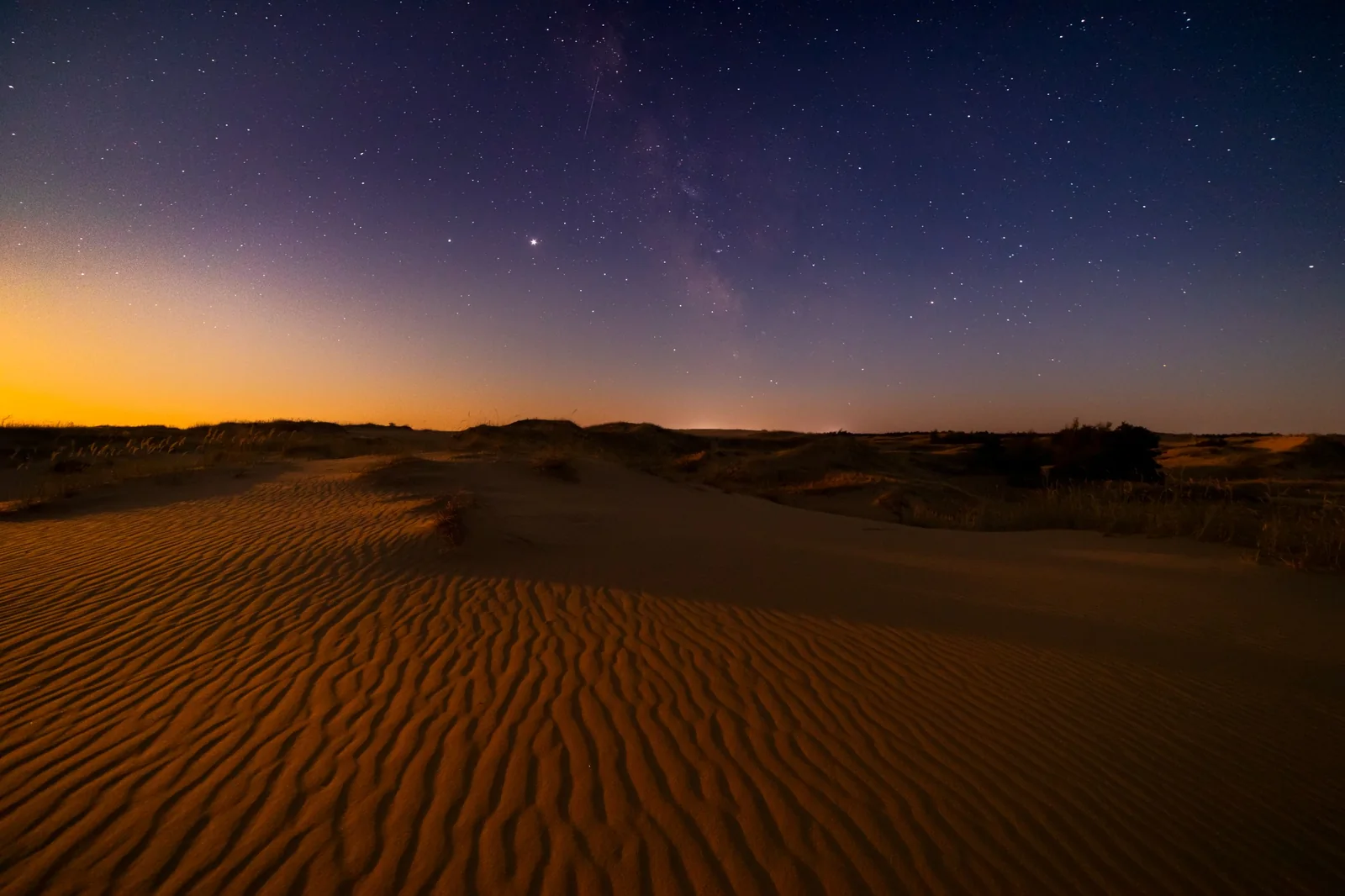
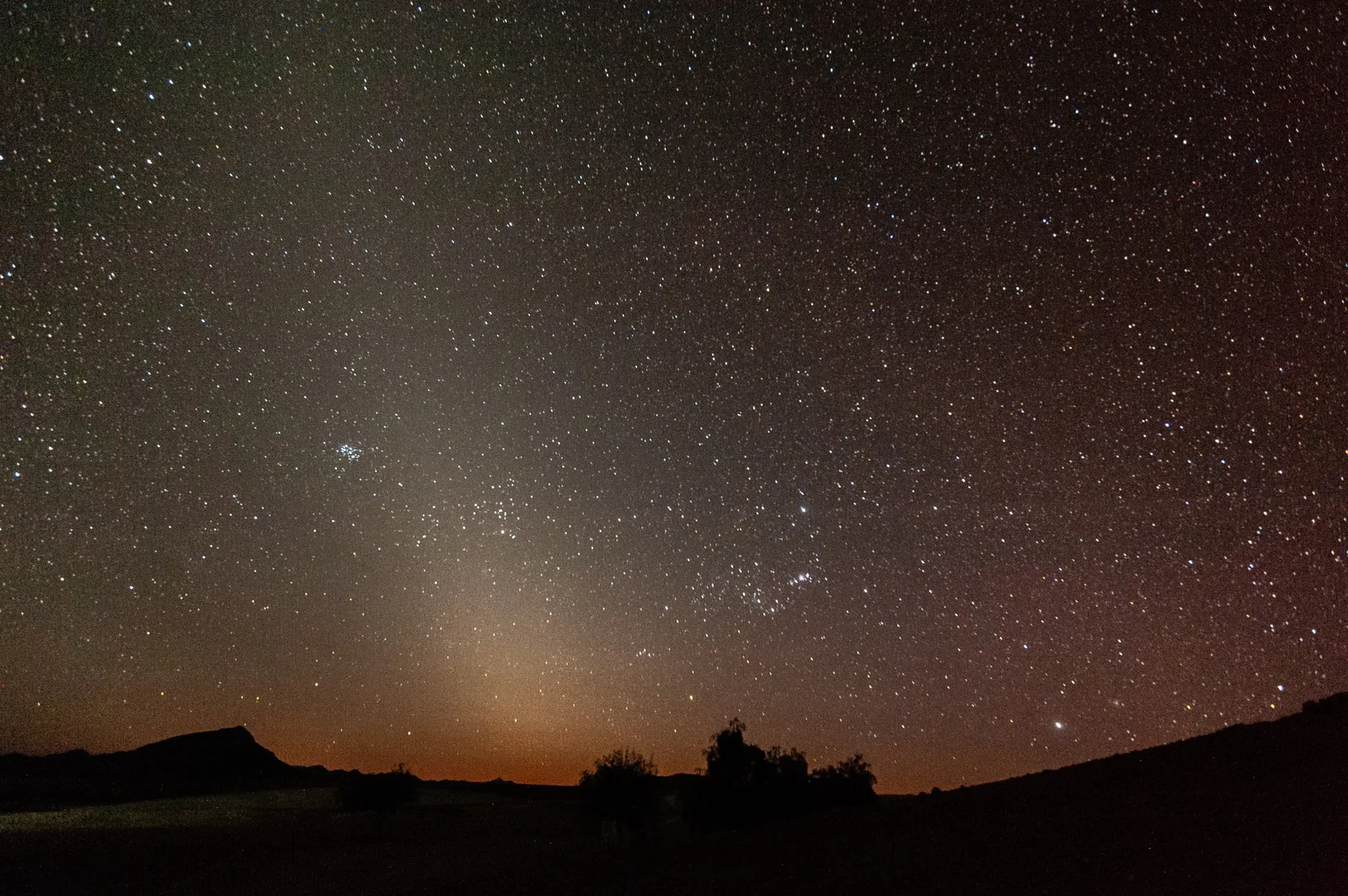
Al Wathba is the convenient option: close enough for an evening trip, dark enough for bright constellations, planets and the major meteor showers, though the city glow on the horizon means the Milky Way stays faint. It pairs naturally with an evening dune drive and camp dinner. See our guide to things to do in Al Wathba for the full picture.
Al Khatim desert
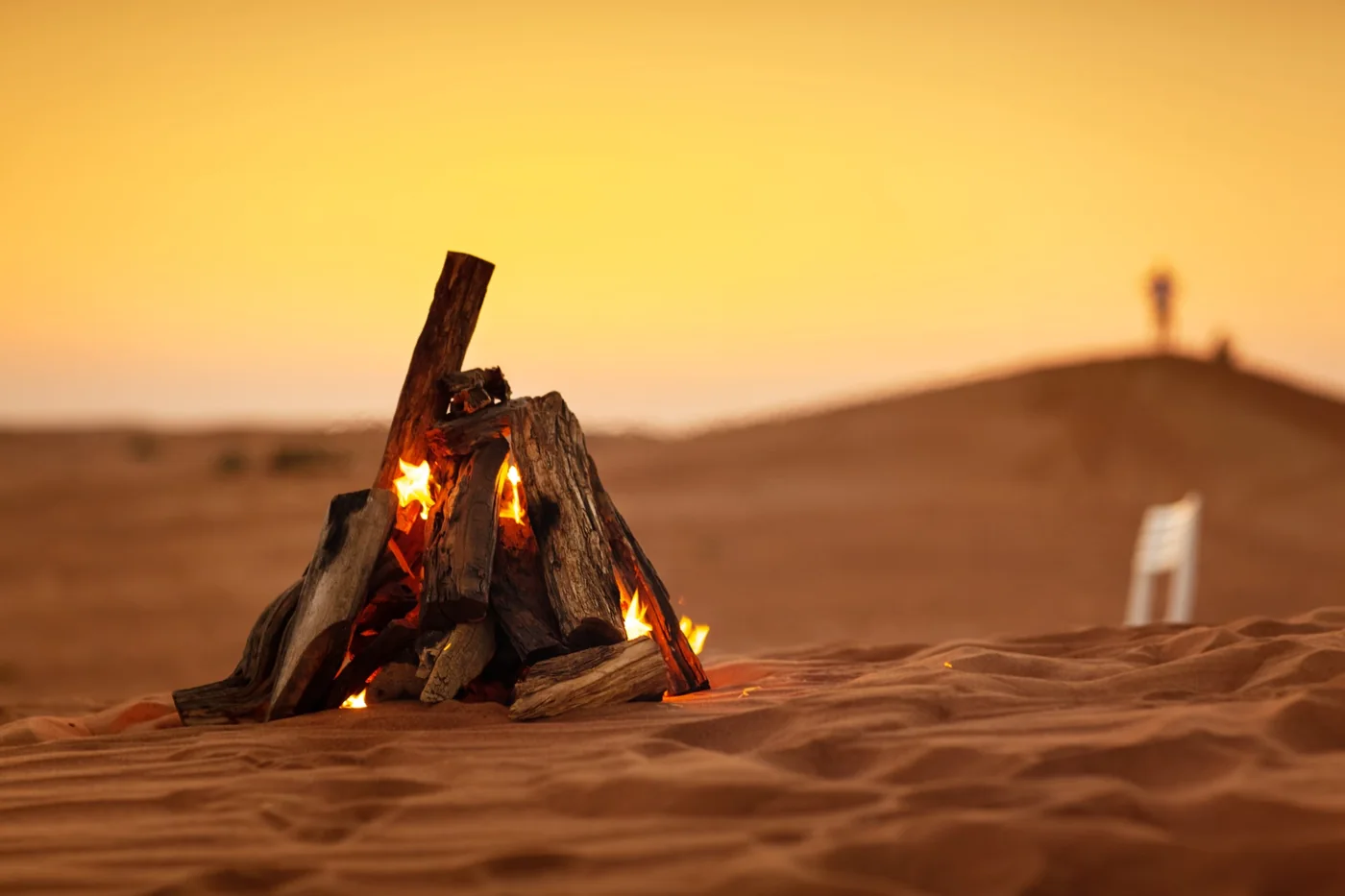
Al Khatim is the golden dune belt on the inland route between Abu Dhabi and Dubai, and the setting for most Abu Dhabi desert safaris. Its rolling dunes and Bedouin-style camps make it the easiest place in the emirate to end a day of dune driving under an open sky, with the brighter constellations, planets and meteor showers all clearly visible once the camp lights are dimmed. Glow from both cities keeps the Milky Way faint here, so treat Al Khatim as the sociable stargazing night rather than the deep-sky one. Our complete guide to desert safari experiences across Abu Dhabi compares every format that runs from these dunes, from morning drives to overnight camps.
Liwa and the edge of the Empty Quarter
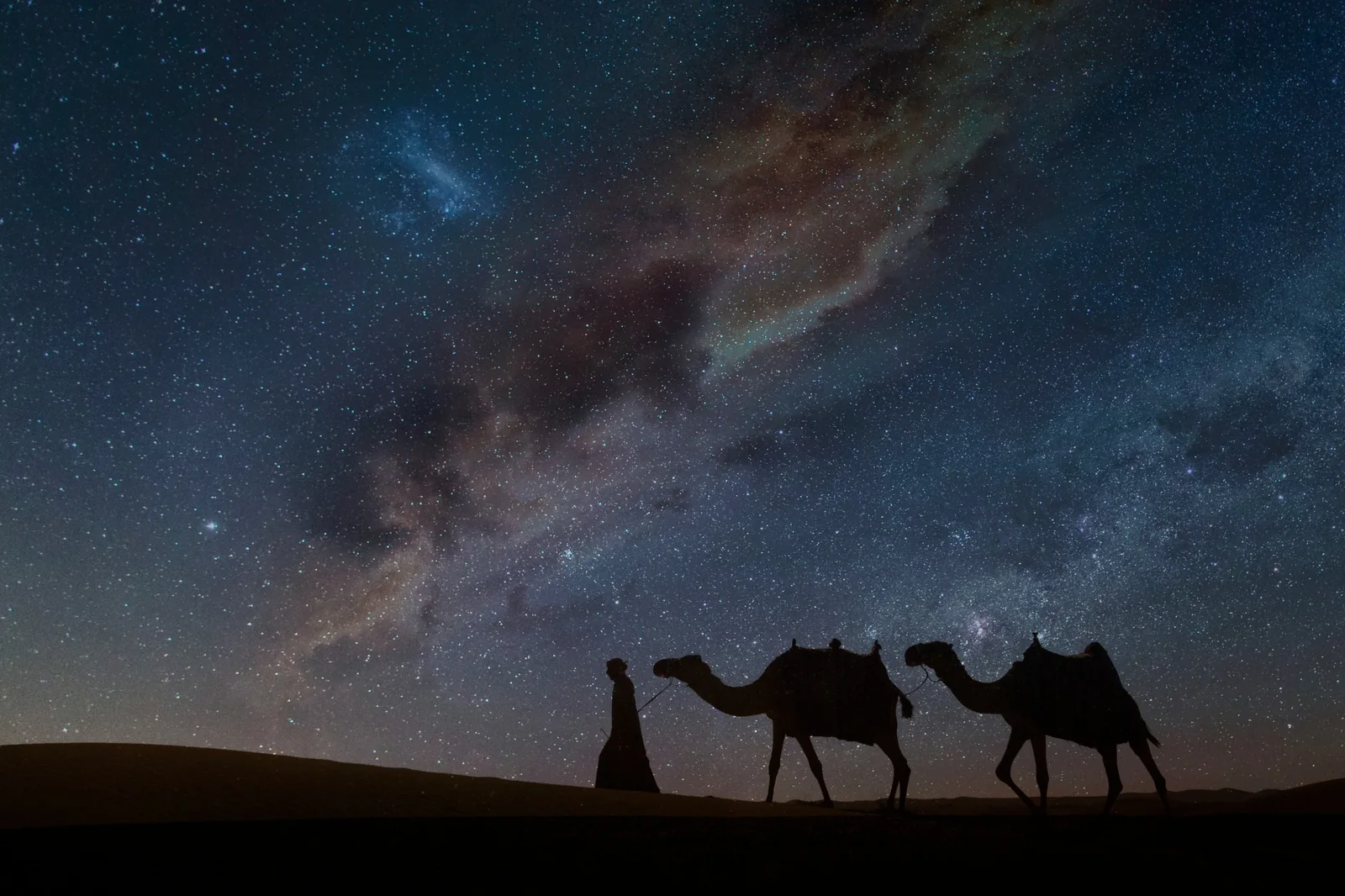
For the committed, the Liwa crescent on the fringe of the Rub Al Khali offers remoteness on a different scale: hundreds of kilometres of empty sand and some of the darkest skies in Arabia, beneath dunes that rise like mountains. It demands a longer journey and an overnight stay, best done as part of a Liwa desert safari.
Jebel Hafeet foothills, Al Ain
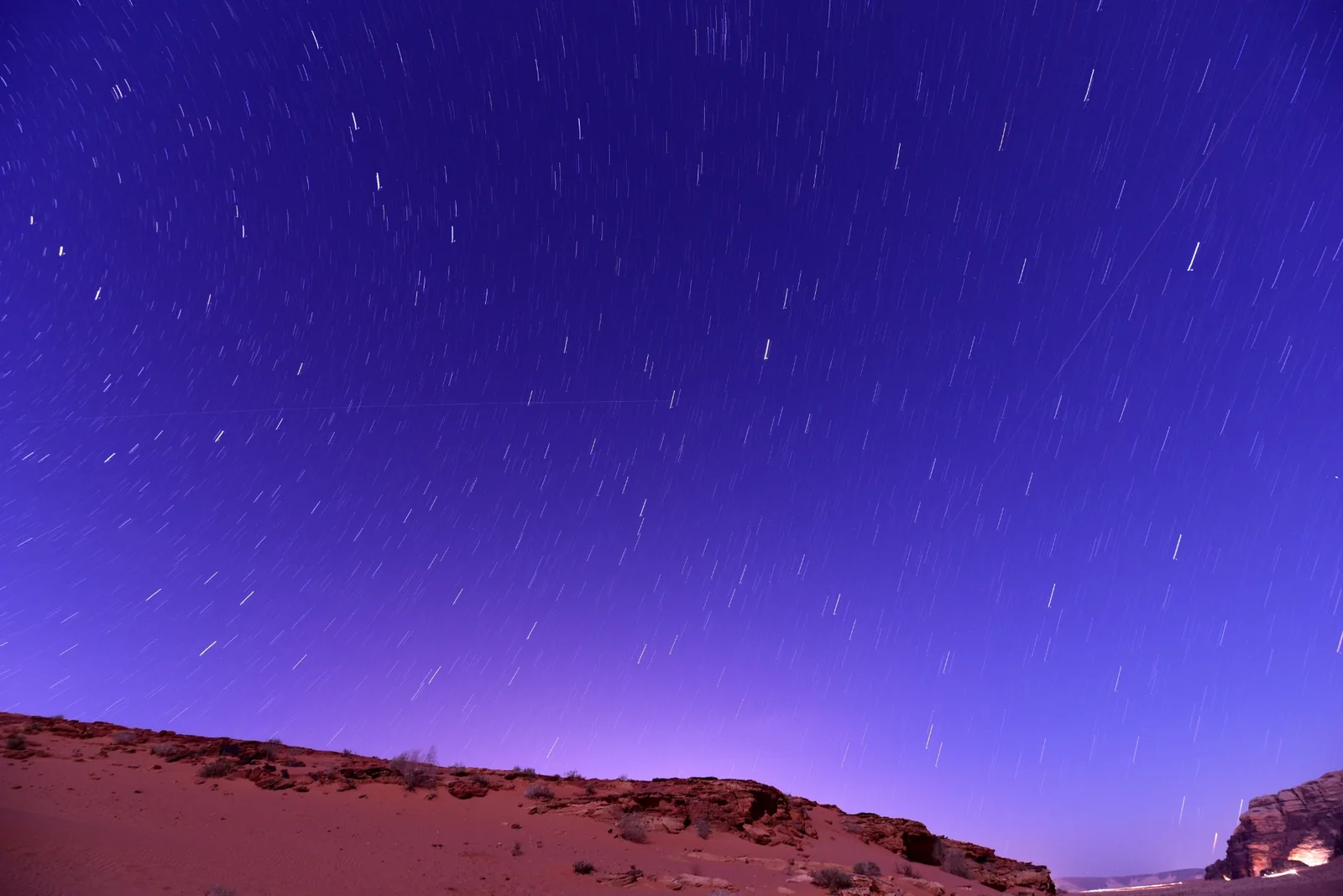
The desert plains around Jebel Hafeet, on the far side of Al Ain, add altitude and mountain scenery to the equation. Al Ain's own lights limit the darkness compared with Al Quaa, but the setting is dramatic and it works well combined with an Al Ain day itinerary.
Abu Dhabi stargazing spots compared
| Spot | Drive from Abu Dhabi | Sky darkness | Milky Way visibility | Best for |
|---|---|---|---|---|
| Al Quaa Milky Way Spot | About 90 minutes | Excellent | Naked eye in season | Milky Way, astrophotography, overnight camping |
| Al Wathba desert | About 45 minutes | Good | Faint at best | Evening safaris, constellations, meteor showers |
| Liwa desert | 2.5 to 3 hours | Exceptional | Naked eye in season | Remote expeditions, mega dune scenery |
| Jebel Hafeet foothills | About 2 hours | Moderate | Limited | Mountain backdrops, Al Ain itineraries |
When to go stargazing in Abu Dhabi
Two calendars matter. The comfort calendar: October to March brings cool, dry desert nights, with the Geminids meteor shower in mid December as a highlight. The Milky Way calendar: the bright galactic core is visible roughly from late February, rising before dawn, through to October in the evening sky.
The overlap is the insider's answer. March and April pre-dawn sessions, and September and October evenings, deliver the core of the Milky Way in comfortable temperatures. In high summer the core is superbly placed in the evening, but expect warm nights even in the open desert.
Whatever the month, plan around the moon: the week either side of a new moon gives the darkest skies, and even a half moon will wash out the Milky Way.
What time of night is best
Full astronomical darkness arrives roughly 90 minutes after sunset. The sweet spot at Al Quaa runs from about 9pm to 3am, once the desert cools and the air steadies. Early in the core season the Milky Way's centre rises in the small hours before dawn; by summer it stands high in the evening sky soon after dark.
Meteor showers visible from Abu Dhabi
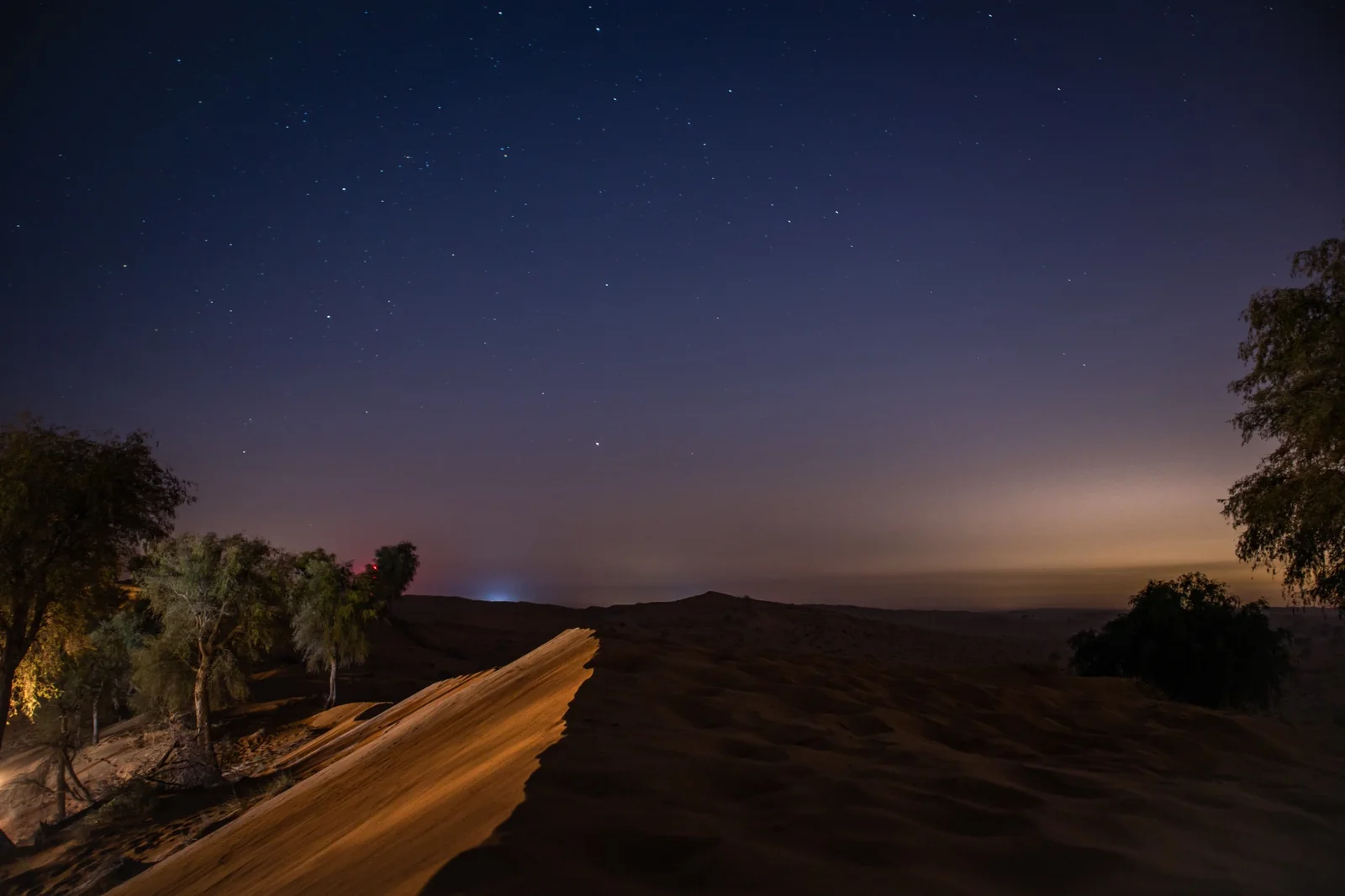
The reliable annual showers are the Quadrantids in early January, the Perseids in mid August, the Orionids in late October and the Geminids in mid December, often the strongest of the year. From a dark site on a moonless night the Geminids can produce well over a meteor a minute at their peak.
What you'll actually see
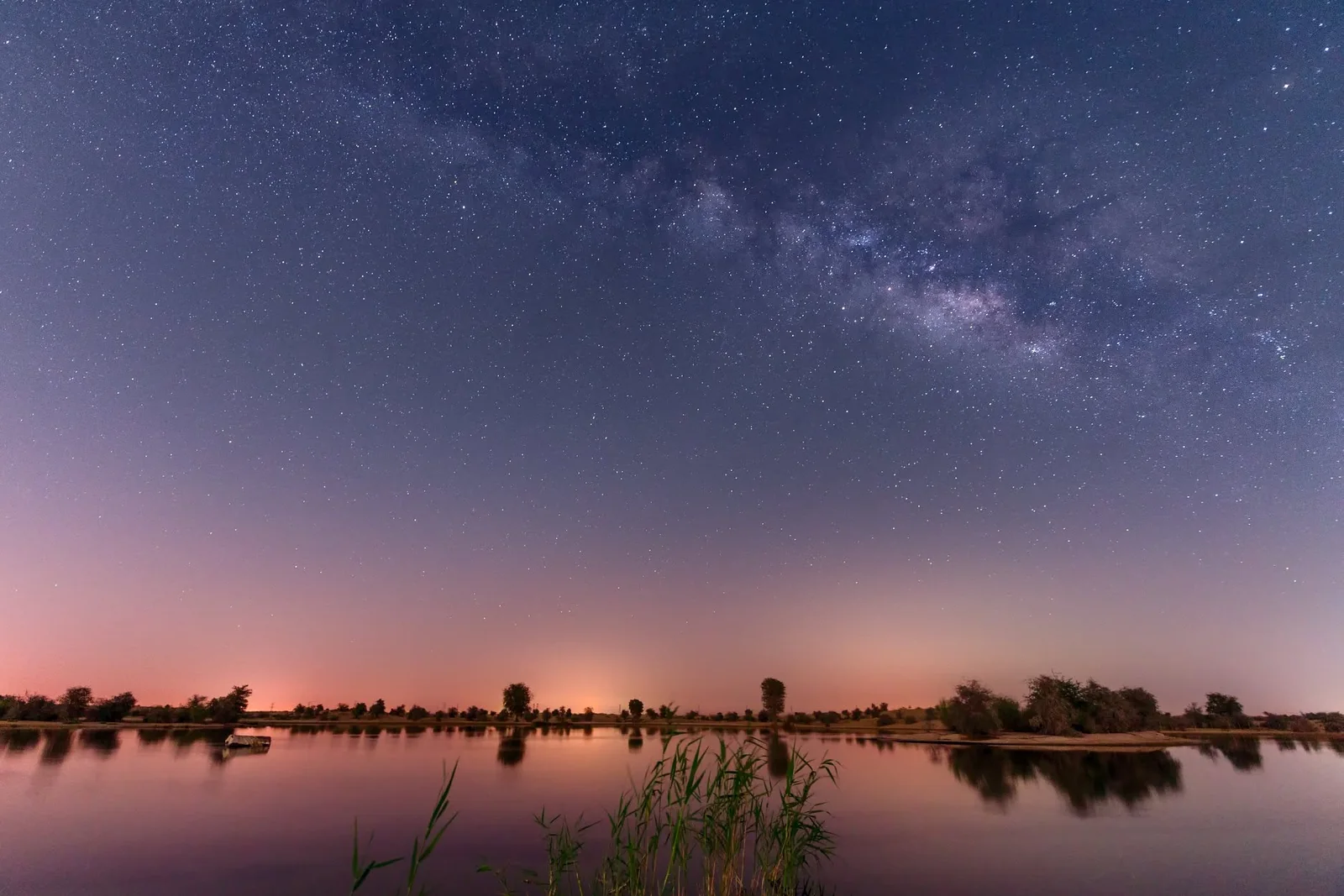
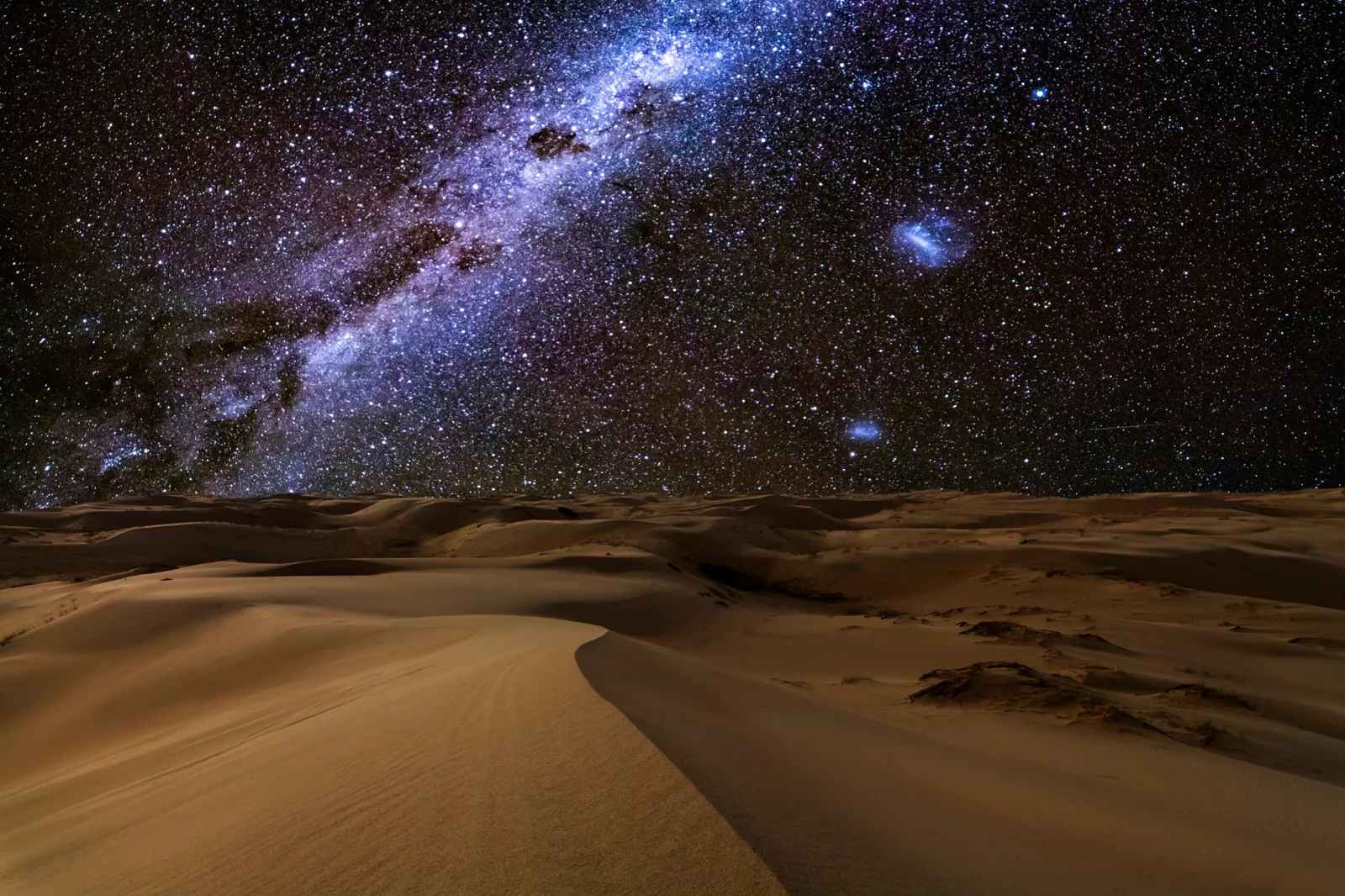
From a genuinely dark site like Al Quaa, on a clear moonless night, the naked eye alone reveals the arch of the Milky Way, thousands of stars, satellites drifting across the sky, and shooting stars even outside the major showers. Planets follow their own calendars: Venus and Jupiter blaze brightly in their apparitions, Saturn and Mars are easy targets, and through a telescope Saturn's rings and Jupiter's moons are the crowd-stoppers of any session.
There's also a sky map written in this region's own history. Arabian astronomy named many of the stars the world still uses, and stars such as Suhail (Canopus) once told desert travellers the seasons were turning and guided caravans and pearling dhows across land and sea. On our astronomy-hosted nights, those stories are told under the same stars they describe.
What to bring for a desert stargazing trip
- Warm layers: desert nights drop sharply, and winter nights at Al Quaa can feel genuinely cold by 2am.
- A red-light torch: red light preserves your night vision; phone torches ruin it for everyone nearby.
- Something to lie on: a mat or low chair makes long sky-watching comfortable.
- Water and snacks: there are no facilities at the dark sites, which is the point.
- A stargazing app: set to night mode, for identifying planets and constellations.
- Camera and tripod: if you shoot, a wide lens and a tripod are enough for your first Milky Way photos.
- A capable 4x4 and recovery basics if self-driving; sand tracks near the dark sites are not for saloon cars.
On a guided Arabiers camp, everything except the personal items is handled: transfers in proper desert vehicles, a set-up camp, bedding, dinner, breakfast and the campfire.
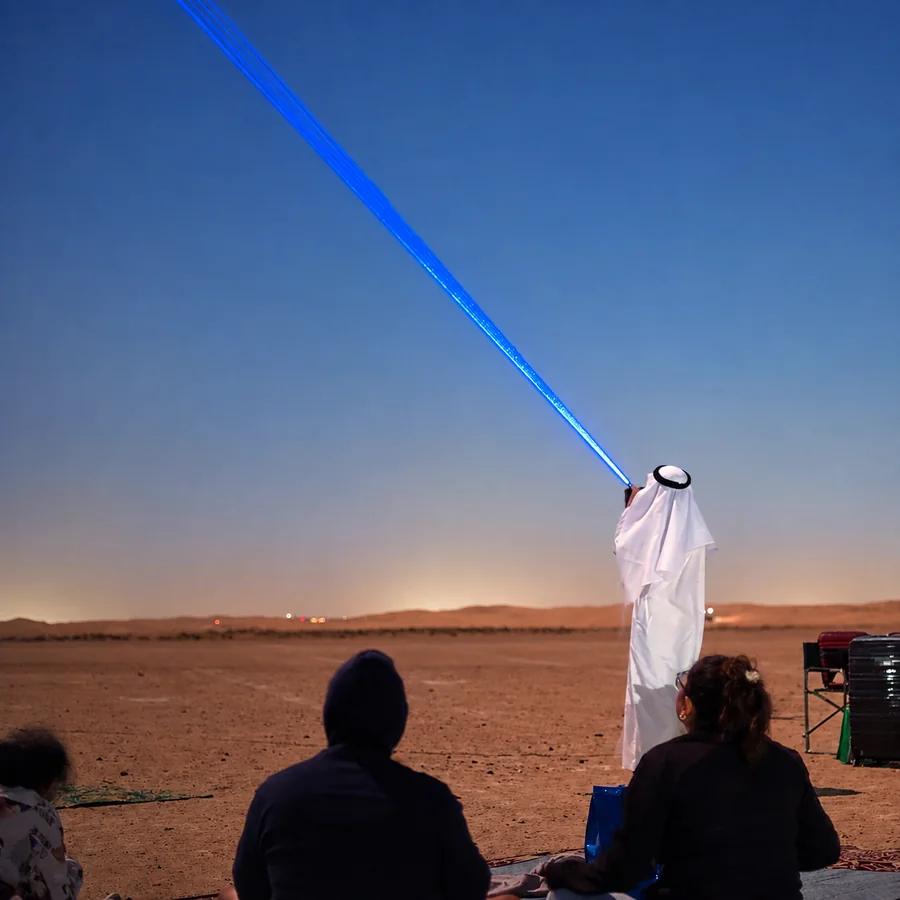
Guided stargazing experiences
Most people searching for stargazing in Abu Dhabi end up asking the same practical question: how do I actually do this without owning a 4x4 and a telescope? The answer is a hosted desert night.
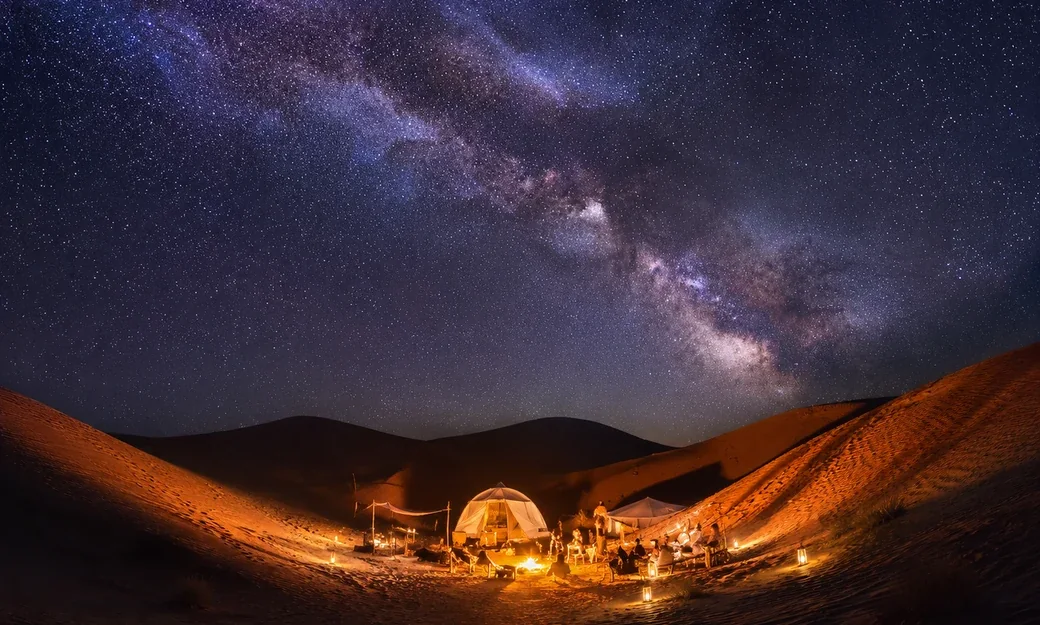
Al Quaa Desert Camping Tour
Our flagship stargazing experience: an overnight private camp at the UAE's darkest accessible site, with transfers, dinner, campfire and breakfast included, and free cancellation up to 24 hours before departure.
View the Al Quaa camping tour →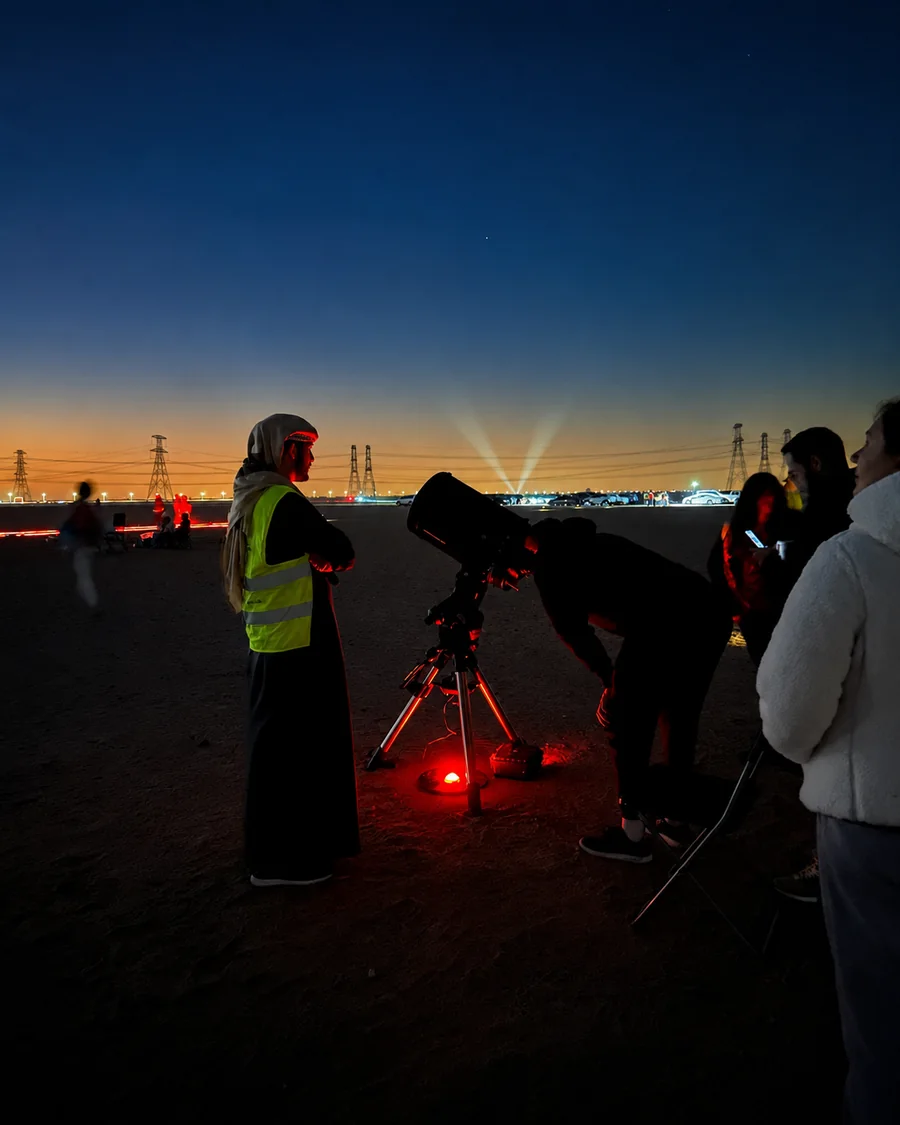
Add a professional astronomy session
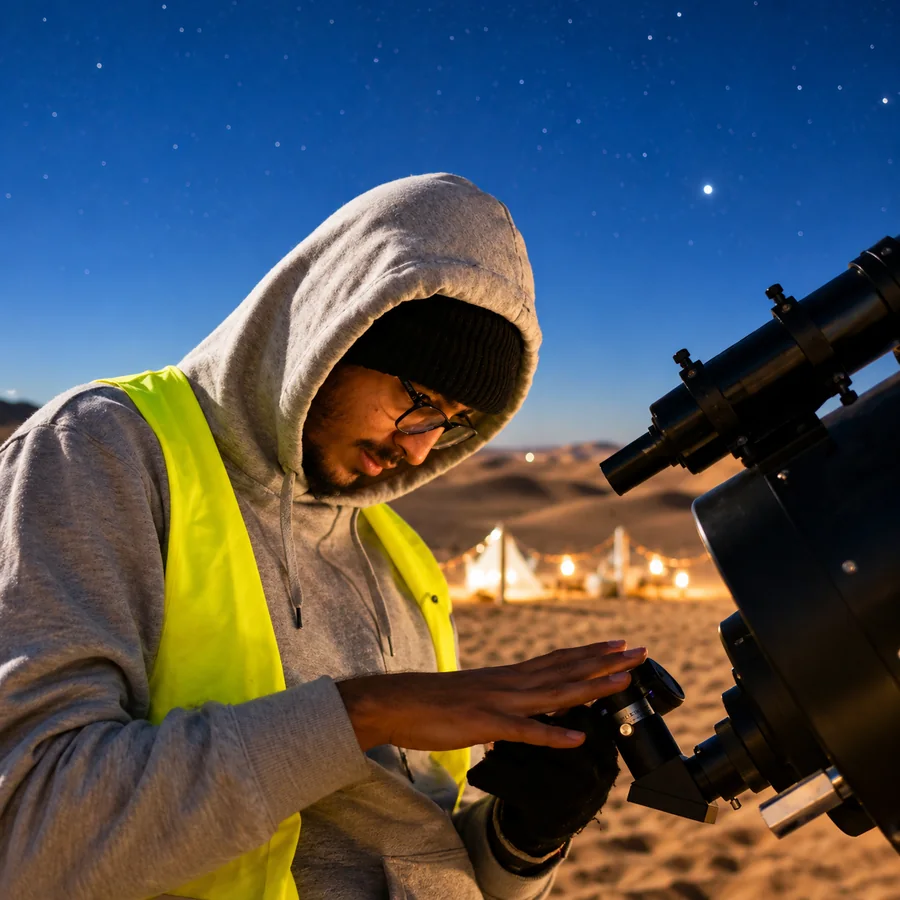
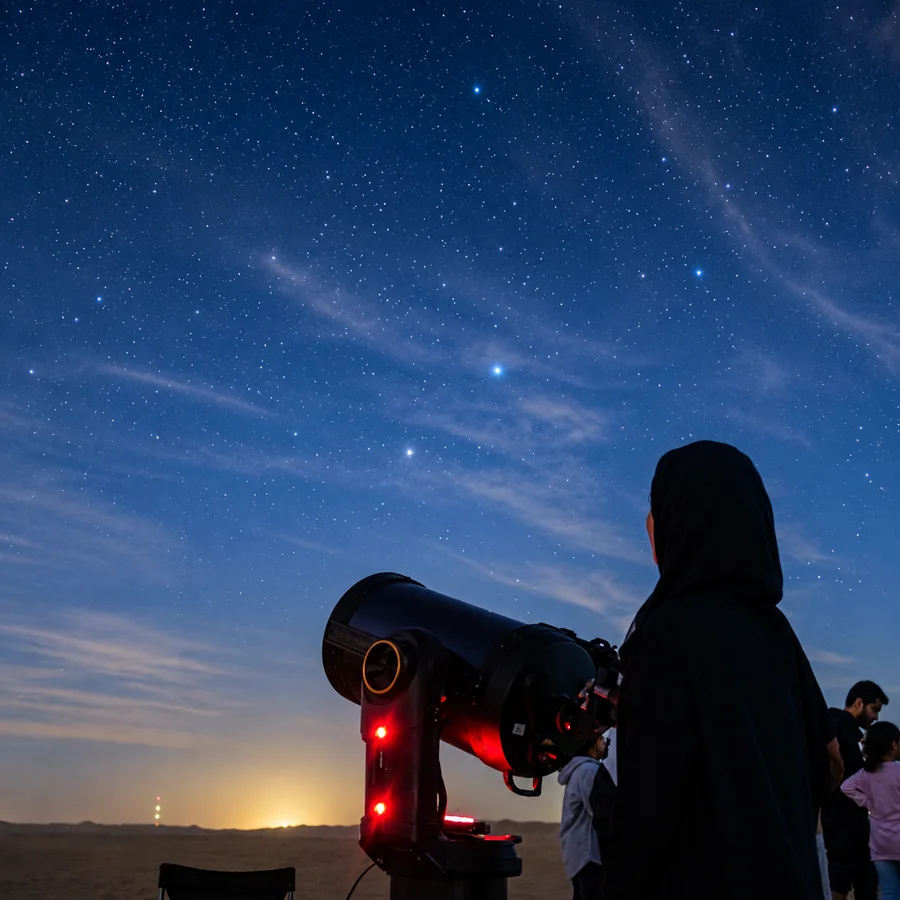
Through our partnership with Dubai Astronomy Group, an expert astronomer joins your camp with professional telescopes for guided observation, Arabian astronomy storytelling and astrophotography help, tailored to your group.
Ask about astronomy hosting →Prefer dunes before dark? Evening 4x4 safaris at Al Wathba end under a sky already good enough for the bright constellations; our complete guide to desert safari experiences across Abu Dhabi compares every format, from morning drives to overnight camps. Staying on the other side of the country? Our companion guide to stargazing near Dubai covers Al Qudra, Hatta and the routes south.
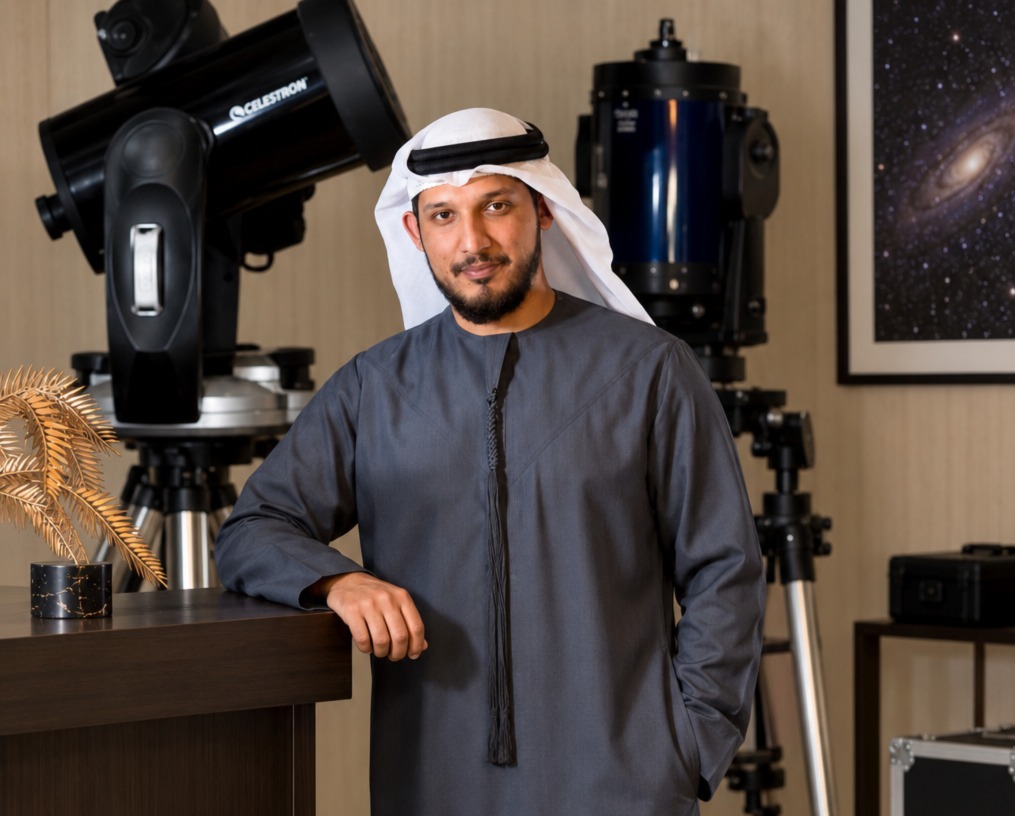
Astronomy content reviewed by Mahmood Hasan, Dubai Astronomy Group's Lead Astro-Tourism Specialist, who has named Al Quaa the UAE's top stargazing site. Read Mahmood's profile.
Stargazing in Abu Dhabi: your questions answered
What is the darkest place in the UAE for stargazing?
The Al Quaa Milky Way Spot, in the desert south of Abu Dhabi on the route towards Al Ain, is widely regarded as the darkest accessible stargazing site in the UAE, and Dubai Astronomy Group's lead astro-tourism specialist has named it the country's top stargazing location. The Liwa desert on the edge of the Rub Al Khali is comparably dark but further from the city.
When can you see the Milky Way in Abu Dhabi?
The bright core of the Milky Way is visible from dark Abu Dhabi desert sites roughly from late February, low in the pre-dawn sky, through to October in the evening sky, with the most convenient evening views in summer and early autumn. Outside core season the fainter outer band of the Milky Way is still visible on clear, moonless nights. Aim for a new moon window and check the moonrise time before you go.
What time is best for stargazing in Abu Dhabi?
Start at least 90 minutes after sunset, once astronomical darkness sets in. The sky is generally at its best between about 9pm and 3am, when the desert has cooled and haze settles. For Milky Way core views early in the season, the core rises in the hours before dawn; by summer it is well placed in the evening.
How much does it cost to visit Al Quaa Milky Way Spot?
The Al Quaa Milky Way Spot itself is an open public desert site with no entry ticket. Costs come from getting there and staying safely: a capable vehicle for the sand tracks, or a guided experience. Arabiers' guided Al Quaa overnight camping includes transfers, a private camp, dinner and breakfast, with astronomy sessions available through our Dubai Astronomy Group partnership.
Can you see the Milky Way from Dubai or Abu Dhabi city?
No. City light pollution in Dubai and Abu Dhabi washes out all but the brightest stars and planets. To see the Milky Way you need to drive well beyond the city glow, which is why sites like Al Quaa, deep in the Abu Dhabi desert, exist as dedicated stargazing destinations.
Which months are best for stargazing in Abu Dhabi?
October to March offers the most comfortable desert nights, clear dry air and popular meteor showers such as the Geminids in December. For the Milky Way core itself, the season runs roughly late February to October, so March and April mornings and September and October evenings are a sweet spot where comfort and the galactic core overlap.
Do I need a telescope to go stargazing in Abu Dhabi?
No. From a dark site like Al Quaa the Milky Way, constellations, meteors and planets are all naked-eye sights. A telescope adds close views of the Moon, planets and deep-sky objects. On Arabiers experiences with a Dubai Astronomy Group session, professional telescopes and a specialist astronomer are provided, so you do not need any equipment of your own.
Are there meteor showers visible from Abu Dhabi in 2026?
Yes. The strongest annual showers visible from Abu Dhabi's deserts are the Perseids peaking in mid August, the Orionids in late October, the Geminids in mid December, which is often the best of the year, and the Quadrantids in early January. Dark sites away from the city, on nights with little moonlight, give the best rates.