




The best stargazing spots in and near Dubai
Dubai's own glow is the obstacle: one of the brightest cities on Earth does not switch off for astronomy. The good news is that darkness scales with distance, so there is a spot for every level of commitment, from a spontaneous evening drive to a full overnight expedition.
Al Qudra Lakes and Al Marmoom
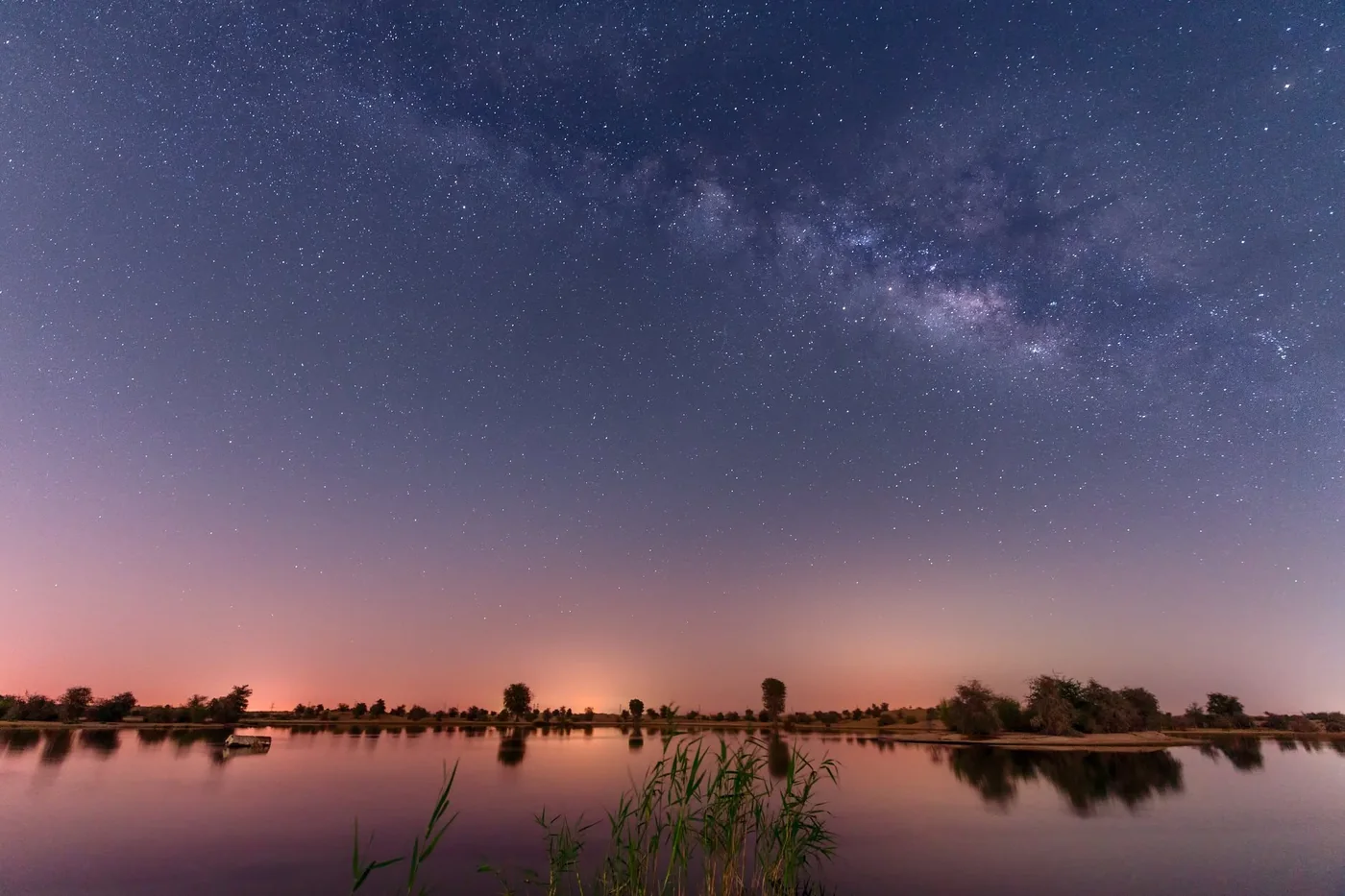
Dubai's default stargazing destination: the desert and man-made lakes off Al Qudra Road, inside the Al Marmoom conservation area. It is close, free and atmospheric, and bright constellations, planets and the major meteor showers all show well here. The city glow on the north-western horizon keeps the Milky Way faint, so treat Al Qudra as the easy night out rather than the deep-sky destination.
Lehbab and the Al Ain Road desert
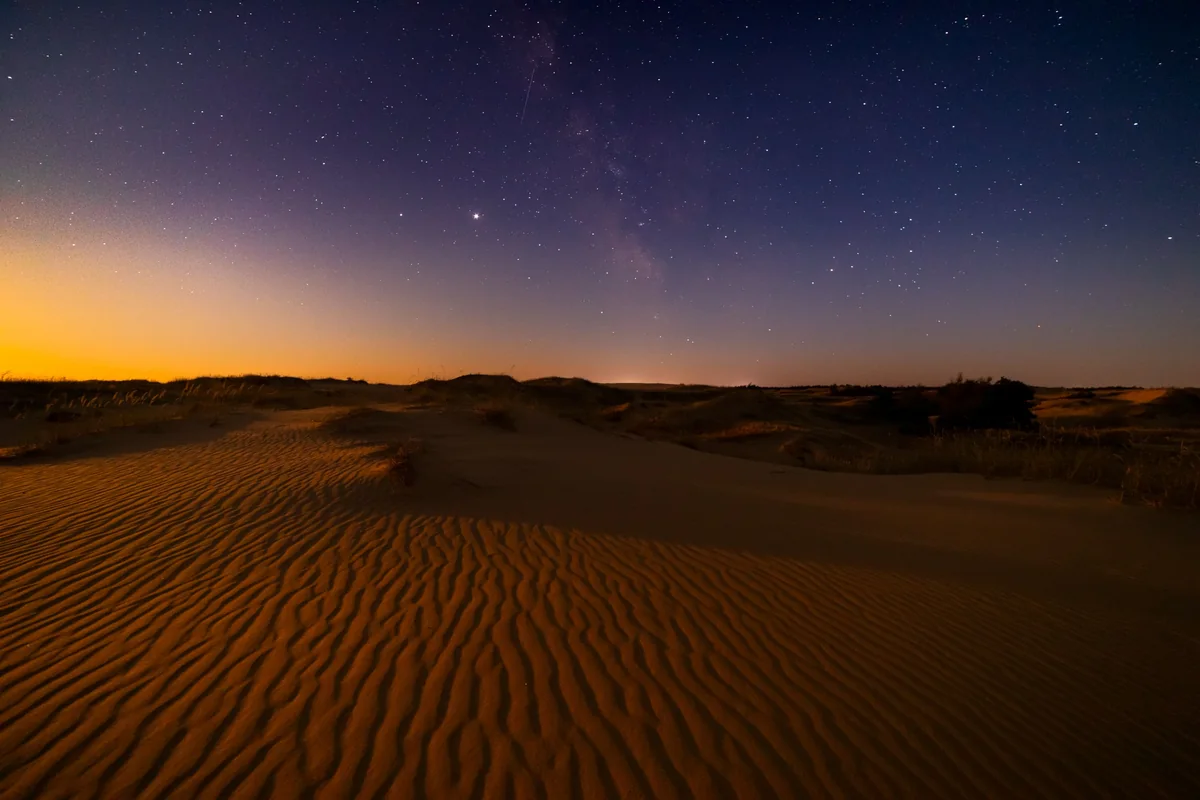
The classic Dubai desert safari belt. The famous red dunes sit far enough out that an evening camp dinner ends under a genuinely starry sky, which is why stargazing is increasingly bundled into safari itineraries here. Darker than Al Qudra, though the city still tints the horizon.
Hatta and the Hajar mountains
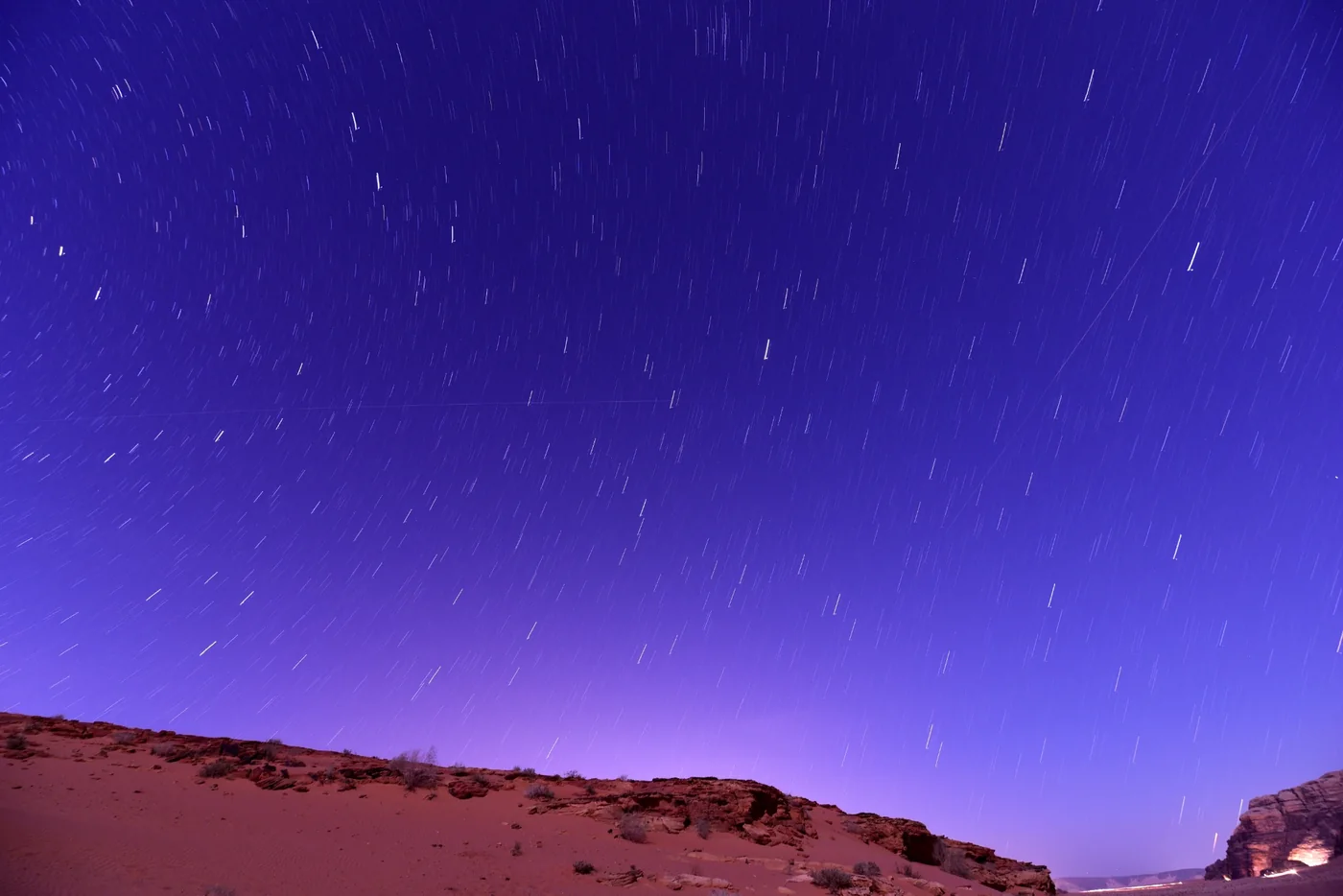
Dubai's mountain exclave trades sand for stone. The Hajar ridges block much of the coastal glow, the air is drier and steadier at elevation, and winter nights get properly cold. A strong choice for combining a day of kayaking or hiking with a night under the stars.
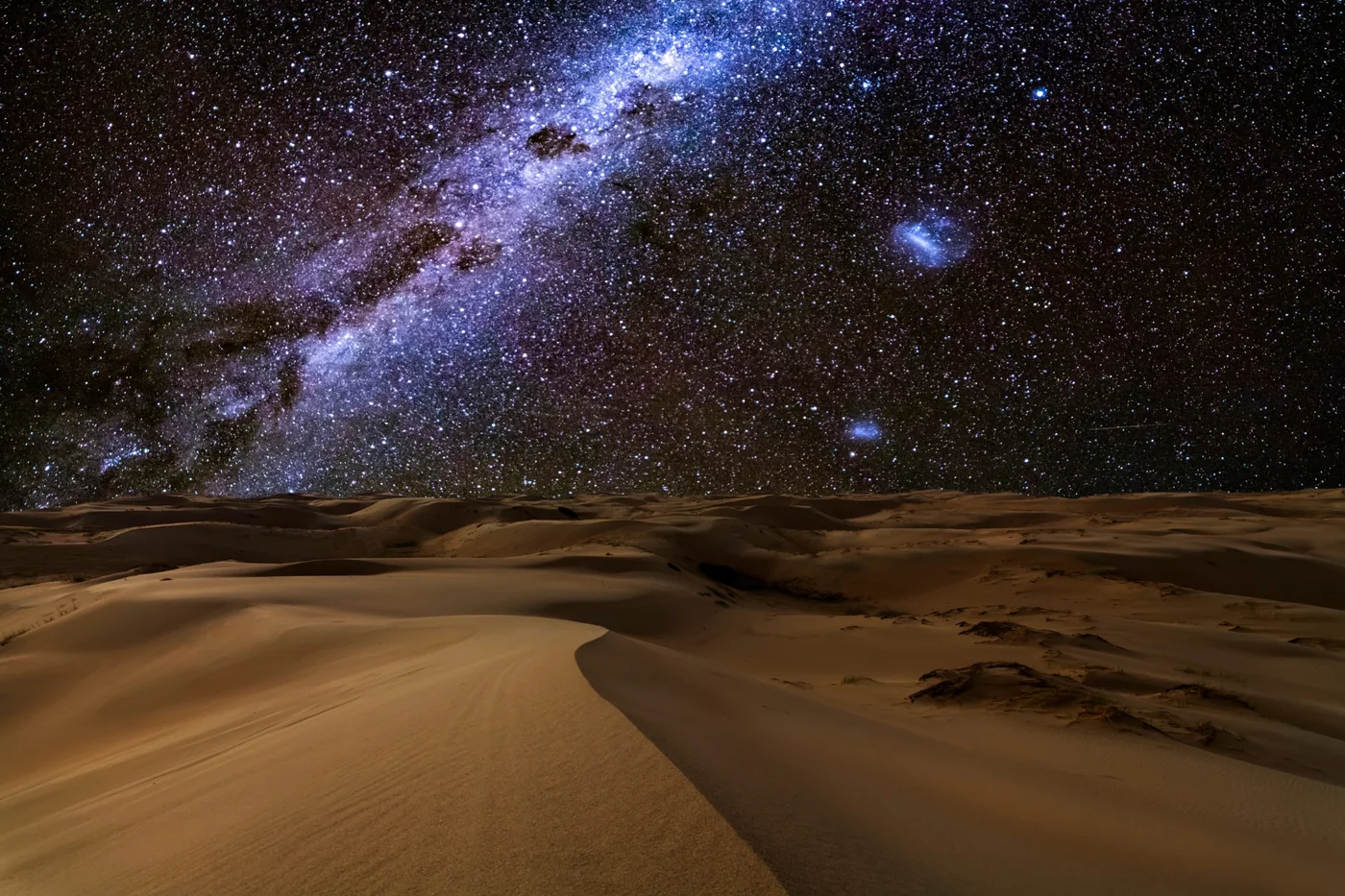
Al Quaa Milky Way Spot
When people near Dubai ask where they can truly see the Milky Way, this is the answer, and it is the site Dubai Astronomy Group's own lead astro-tourism specialist has named the top stargazing location in the UAE. Al Quaa sits in the Abu Dhabi desert towards Al Ain, beyond the reach of any city glow, and the final approach runs on sand tracks best left to a 4x4. The distance is exactly why most Dubai visitors do it as a hosted overnight: our Al Quaa desert camping tour collects you in Dubai, and our full guide to stargazing in Abu Dhabi covers the site in depth.
Dubai stargazing spots compared
| Spot | Drive from Dubai | Sky darkness | Milky Way visibility | Best for |
|---|---|---|---|---|
| Al Qudra and Al Marmoom | 30 to 45 minutes | Moderate | Faint at best | Spontaneous evenings, constellations, meteor showers |
| Lehbab desert | 45 to 60 minutes | Good | Faint | Evening safaris ending under the stars |
| Hatta mountains | About 90 minutes | Good to very good | Visible on ideal nights | Mountain scenery, adventure day trips |
| Al Quaa Milky Way Spot | 2 to 2.5 hours | Excellent | Naked eye in season | The full Milky Way, astrophotography, overnight camps |
When to go stargazing from Dubai
October to March brings the conditions stargazers want: cool nights, low humidity and the steadiest, most transparent air. Summer stargazing is possible, and it is actually peak season for the Milky Way core in the evening sky, but expect warm nights and more haze near the coast.
Weather matters more in Dubai than people expect. The ideal night is dry, still and dust-free; humidity and suspended dust soften the sky, which is another reason the inland and elevated spots outperform anywhere near the coast. And always plan around the moon: the week either side of new moon is when the desert sky performs.
Time of night: full darkness arrives about 90 minutes after sunset, and the hours between 9pm and 3am are best, after the desert cools.
Observatories and astronomy clubs in Dubai
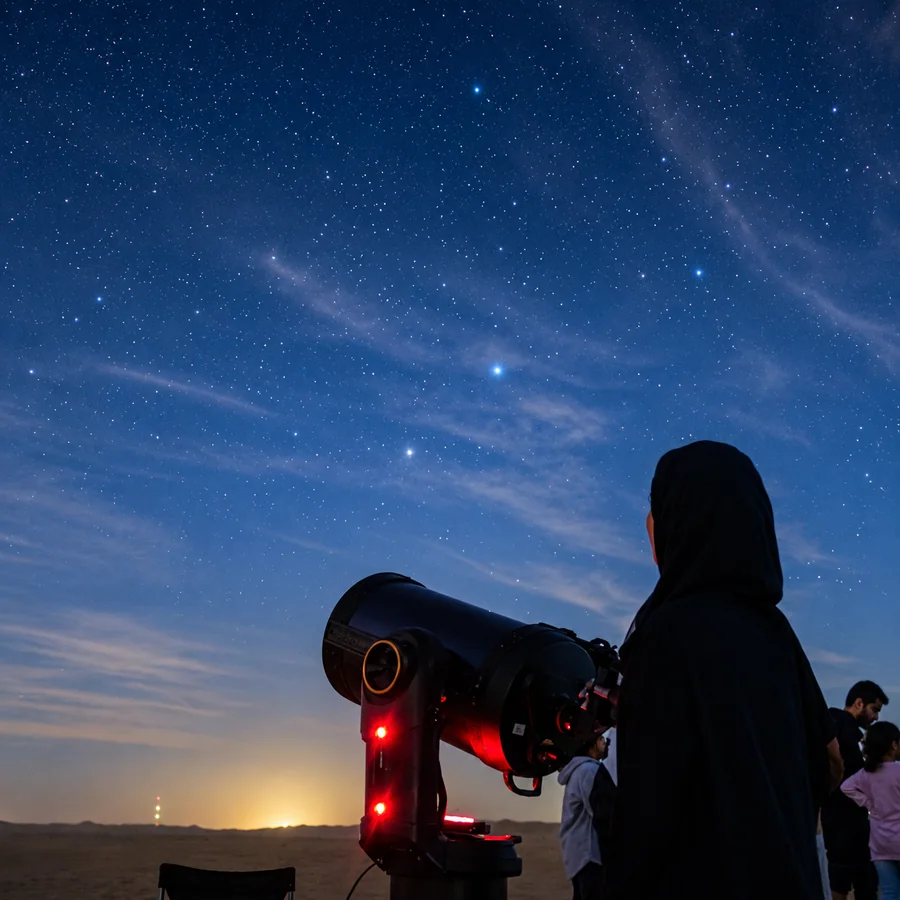
Dubai has a proper astronomy institution: the Al Thuraya Astronomy Centre in Mushrif Park, the UAE's first public observatory, operated by Dubai Astronomy Group. DAG, the non-profit founded in 2000 that has led the country's astronomy scene ever since, runs public stargazing nights, courses, planetarium sessions and desert events through the year, and welcomes new members of every level, which is the practical answer to joining an astronomy club in Dubai.
Arabiers works with Dubai Astronomy Group as our astronomy partner, which means the same specialists who run the city's observatory can host the telescope session at your private desert camp.
Sky events worth planning around
The dependable annual meteor showers visible from the deserts around Dubai are the Perseids in mid August, the Orionids in late October, the Leonids in mid November and the Geminids in mid December, usually the strongest display of the year. The Quadrantids follow in early January.
Looking further ahead, the region hosts one of the decade's great astronomical events: the total solar eclipse of 2 August 2027, whose path of totality crosses Egypt and southern Saudi Arabia, with a deep partial eclipse visible from the UAE. Expect regional astronomy travel to spike around it.
Stargazing tours and packages with Dubai pickup
The questions people put to search engines and AI assistants about Dubai stargazing keep circling the same needs: a guided tour, a package with tickets sorted, an overnight option, a private experience for two, and no equipment to buy. A hosted desert camp answers all of them at once.
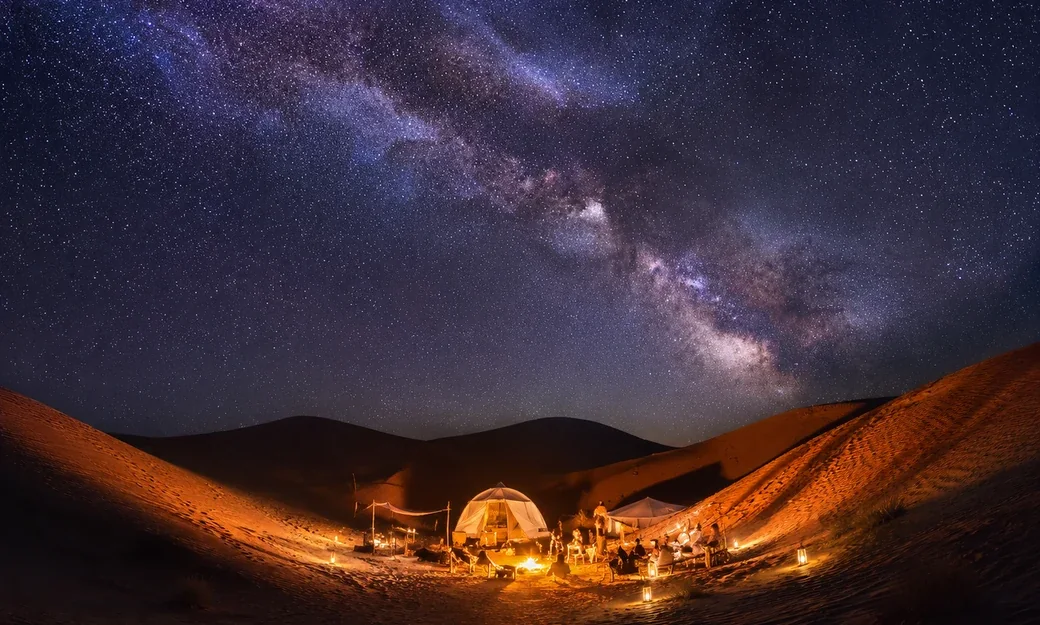
Al Quaa overnight camping, from Dubai
Hotel pickup in Dubai, a private camp at the darkest accessible site in the UAE, dinner, campfire and breakfast included, and free cancellation up to 24 hours before departure. The definitive answer to the Milky Way question.
View the Al Quaa camping tour →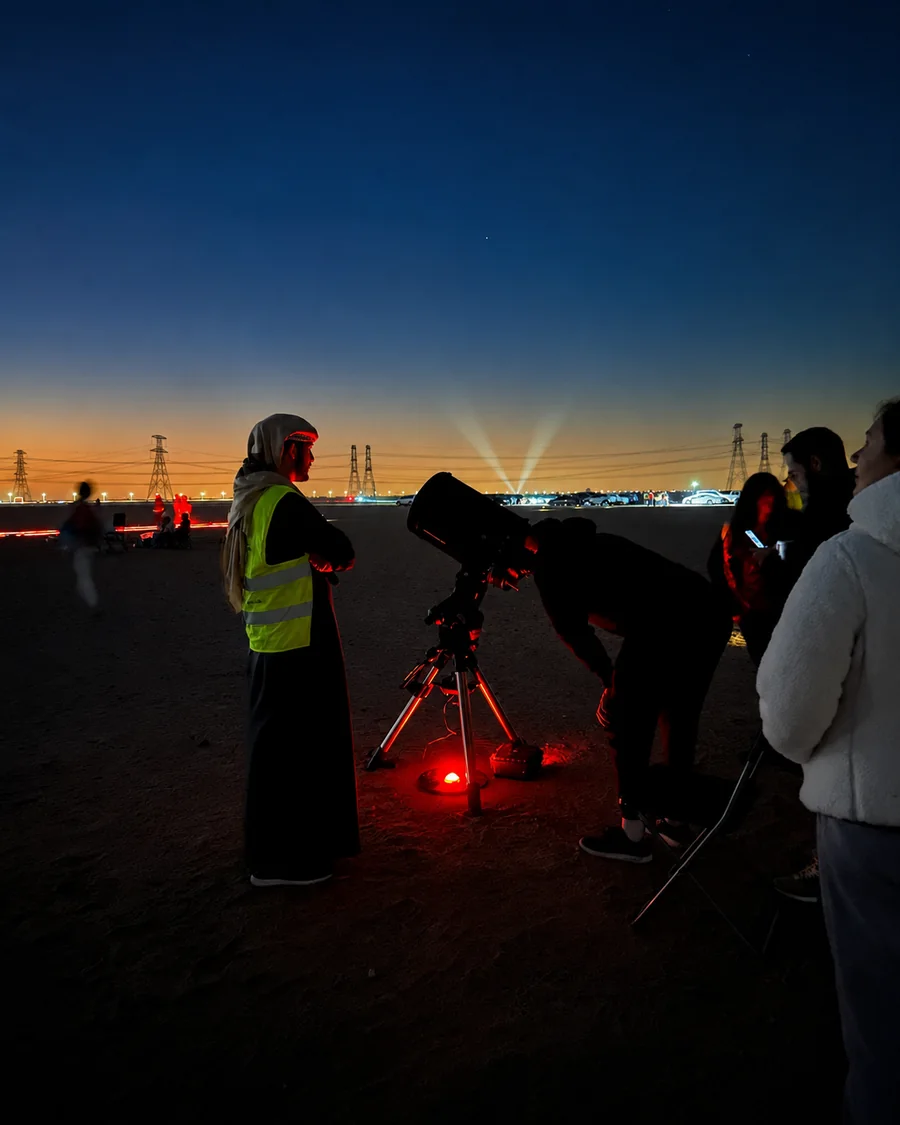
Private astronomy hosting for your group
Add a Dubai Astronomy Group specialist to your camp: professional telescopes, guided observation, Arabian sky storytelling and astrophotography help, tailored for couples, families or corporate groups.
Ask about astronomy hosting →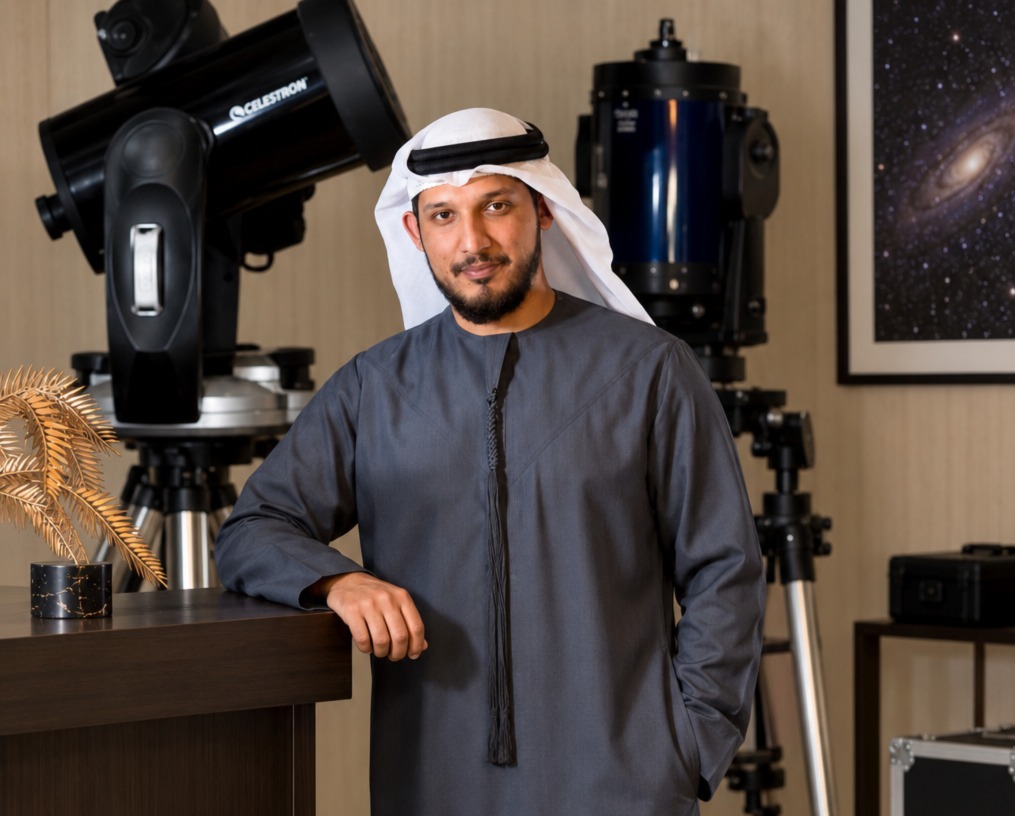
Astronomy content reviewed by Mahmood Hasan, Dubai Astronomy Group's Lead Astro-Tourism Specialist. Read Mahmood's profile.
Stargazing in Dubai: your questions answered
Where is the darkest spot near Dubai for stargazing?
Within Dubai's own borders, the deep desert beyond Al Marmoom and the Hatta mountains are the darkest options. For genuinely dark skies, the Al Quaa Milky Way Spot in the Abu Dhabi desert, around 2 to 2.5 hours from Dubai, is the darkest accessible site in the UAE and the one astronomers themselves recommend.
Can you see the Milky Way from Dubai?
Not from the city, and only faintly from nearby spots like Al Qudra, where Dubai's light dome washes out the galaxy. To see the Milky Way properly you need to put real distance between yourself and the city: on ideal nights Hatta can show it, and Al Quaa reveals it in full during the core season, which runs roughly late February to October.
Do you need a 4x4 to get to Al Quaa Milky Way Spot?
The drive from Dubai is tarmac almost the whole way, but the final stretch to the good dark-sky positions runs on sand tracks where a saloon car risks getting stuck. A 4x4 is strongly recommended if self-driving. On a guided camp the desert transfer is handled for you in proper off-road vehicles.
Is the Al Quaa Milky Way Spot free, and what does camping there cost?
Yes, Al Quaa is an open public desert site with no ticket or entry fee. Camping independently costs only your equipment and fuel, but you must be fully self-sufficient as there are no facilities. A hosted overnight camp, with Dubai pickup, a set-up private camp, dinner and breakfast, is priced per group; see the Al Quaa camping tour page for current rates.
What is the best time of year for stargazing in Dubai?
October to March gives the coolest, clearest and most comfortable desert nights, along with the Geminids meteor shower in December. If the Milky Way core is the goal, plan between late February and October, when the galactic centre is above the horizon, and always aim for a new moon window on a dry, dust-free night.
Are there guided stargazing tours from Dubai?
Yes. Arabiers runs overnight stargazing camps with hotel pickup in Dubai, travelling to the Al Quaa Milky Way Spot, with the option of a professional astronomy session hosted by a Dubai Astronomy Group specialist with telescopes provided. Evening desert safaris in the Lehbab dunes also end under a starry sky for a lighter option.
Is there an observatory or astronomy club in Dubai?
Yes. The Al Thuraya Astronomy Centre in Mushrif Park is the UAE's first public observatory, operated by Dubai Astronomy Group, which also runs public stargazing events, courses and planetarium sessions and accepts members of all experience levels. It is the natural starting point for anyone wanting to join Dubai's astronomy community.
Which meteor showers and sky events can I see from Dubai in 2026?
From the deserts around Dubai the reliable showers are the Perseids in mid August, the Orionids in late October, the Leonids in mid November, the Geminids in mid December and the Quadrantids in early January. Further ahead, the total solar eclipse of 2 August 2027 crosses Egypt and southern Saudi Arabia, with a deep partial eclipse visible from the UAE.