


 Destination
 Verified
Position
Northernmost of the seven emirates
Borders Oman's Musandam exclave. About 1 hour from Dubai, 45 minutes from Dubai International Airport to the city.
Highest point
Jebel Jais, 1,934 m
The UAE's highest mountain, in the Hajar range.
Headline record
World's longest zipline
Jais Flight, 2.83 km, Guinness World Records certified.
Coastline
About 64 km
Beaches, mangroves, Al Marjan Island and the Al Hamra marina.
History
7,000 years of settlement
Bronze Age tombs at Shimal; medieval Julfar traded with China and East Africa.
Coming in 2027
Wynn Al Marjan Island
1,542 rooms, 70 storeys, the UAE's first commercial gaming licence.
The mountain is the reason most people make the drive. At 1,934 metres it is the highest point in the country, with a 30 km road of switchbacks to the top, viewing decks, marked hiking trails, and air that runs ten degrees cooler than the coast. In winter the summit can touch zero in the early morning. It is the only place in the UAE where "mountain weather" is a real planning consideration rather than a figure of speech.
Drive: about 1.5 to 2 hours from Dubai to the summit. Best months: October to April.
The single most famous thing in the emirate. Jais Flight launches from 1,680 metres and runs 2.83 km across the Hajar canyons with riders in a belly-down harness at up to 160 km/h. It is certified by Guinness World Records as the longest zipline in the world and has carried well over 100,000 riders since 2018. Around it sit the Jais Sky Tour (six ziplines and the UAE's highest sky bridge), the Jais Sledder mountain coaster, a via ferrata and the Bear Grylls Explorers Camp.
Runs Wednesday to Sunday. Guide price AED 360 to 450 per adult. Full details on our Jebel Jais Zipline page and in our step-by-step planning guide.
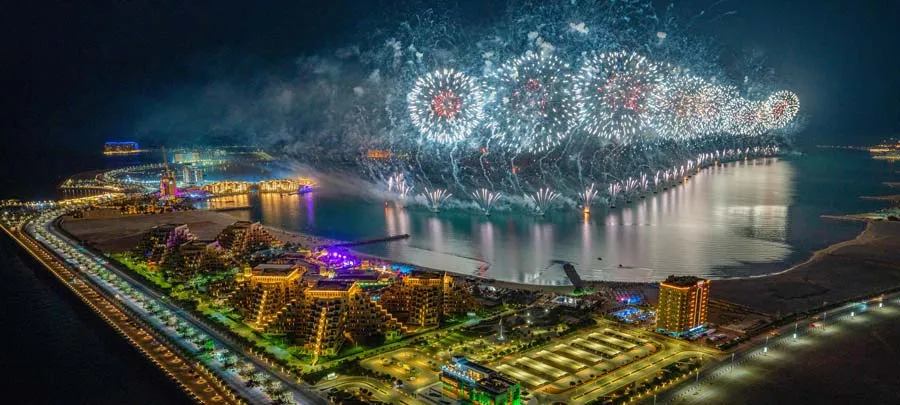
Ras Al Khaimah has made New Year's Eve its signature night. The fireworks run along six kilometres of coastline from Al Marjan Island to Al Hamra, and the emirate has used the occasion to set a string of Guinness World Records. Welcoming 2026, it flew 2,300 drones, 1,000 of them carrying pyrotechnics, into the largest aerial image of a phoenix ever formed by drones. Hotels on the coast sell out months ahead for the night.
Best vantage points: Al Marjan Island, Al Hamra beach, the Al Qawasim Corniche. Book accommodation by October.
In October 2024 the UAE issued its first commercial gaming operator's licence, to Wynn Resorts, for a 70-storey, 1,542-room integrated resort on Al Marjan Island. It is scheduled to open in September 2027 and is the reason the island's skyline is changing by the month. Whatever your view of gaming, it has put Ras Al Khaimah on international investment and travel pages for the first time.
Al Marjan Island is already the emirate's main resort zone, with Rixos, Mövenpick, Radisson, Hampton and Rove properties open.
Ras Al Khaimah has the densest concentration of archaeological sites in the UAE. The Shimal plain below Jebel Jais holds Bronze Age Umm an-Nar tombs and the Wadi Suq settlement; the medieval port of Julfar, on the north edge of the modern city, traded with China, India and East Africa and exported pottery across the Gulf; and the ruling Qawasim family's 18th-century fort in the old town now houses the National Museum of Ras Al Khaimah.
The museum is a 20-minute stop and the best single place to understand the emirate before you drive into it.
The only surviving hilltop fort in the UAE, built in the 16th century on a rock above the date palms north of the city. It was the last position to fall in the 1819 British campaign against Ras Al Khaimah, and the view from the top, over the palm oasis to the mountains on one side and the sea on the other, explains why it was built there. The climb is 234 steps.
Free to visit. Go at sunrise or an hour before sunset; there is no shade on the stairs.
Before oil, pearls were the economy of the Gulf and Ras Al Khaimah's creek was one of its harbours. Suwaidi Pearls, at Al Rams on the lagoon north of the city, is the only working pearl farm left in the region. Visits go out by traditional boat to the floating farm, where oysters are opened in front of you and the grading explained.
About 90 minutes. Book ahead; tours do not run every day.
A whole coral-stone village abandoned in the late 1960s when its families moved to the new towns, and never redeveloped. Mosques, courtyard houses and wind towers stand roofless but intact. It is the best-preserved traditional settlement in the UAE and is used as a film set as often as a heritage site.
Free, open ground. Combine with Al Hamra beach or the Sofitel and Ritz-Carlton Al Hamra for lunch.
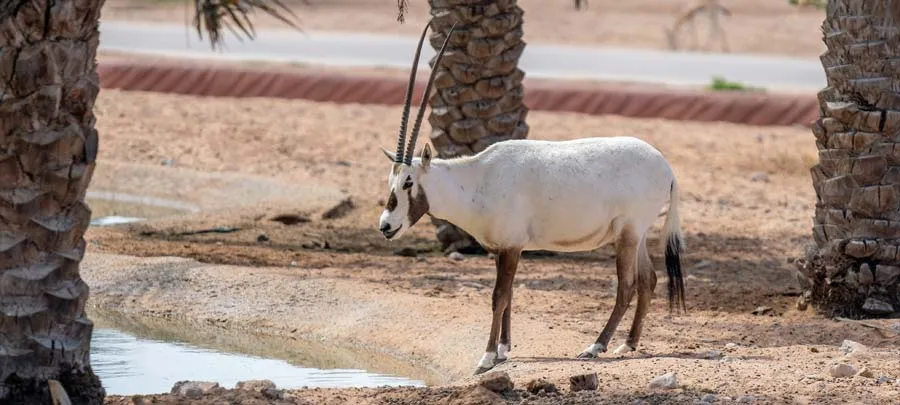
Inland from the coast the emirate turns to red dunes and ghaf woodland. The Al Wadi nature reserve holds free-roaming Arabian oryx and gazelle, and the Ritz-Carlton Al Wadi Desert sits inside it in tented villas. It is also where we run our desert safaris, which are quieter and emptier than the Dubai equivalents because the dunes are not shared with fifty other operators.
Our Ras Al Khaimah desert safari runs morning, evening and overnight. It pairs with a Jebel Jais morning in one vehicle.
Ras Al Khaimah is the UAE's hiking emirate. Jebel Jais has a marked trail network, the Jais via ferrata strings a kilometre of fixed cable and three ziplines across the rock face, and wadis such as Wadi Shawka and Wadi Ghalilah hold the serious routes, including the Stairway to Heaven. The Highlander multi-day hiking event comes to the mountain every November, and an 80 km Grand Loop trail was announced in September 2026 for the 2026/27 season.
Hiking season is October to April only. Mountain rescue is available but you are expected not to need it.
North of the city the coast dissolves into mangrove lagoons that hold flamingos in winter, and the kayaking is calm enough for children. South of it, Al Marjan Island, Al Hamra and Mina Al Arab carry the beach resorts. The coastline is 64 km of mostly undeveloped shore, which is unusual in the UAE and is why the emirate markets itself on nature rather than skyline.
Kayak rentals and guided mangrove tours leave from Mina Al Arab and the RAK Corniche.
The thing residents know and visitors do not: Ras Al Khaimah is an industrial emirate. RAK Ceramics is among the largest ceramics manufacturers in the world, Stevin Rock runs one of the world's largest limestone quarries in the Hajar foothills, and Saqr Port is the biggest bulk-handling port in the Middle East. The grey trucks on the E311 are carrying the emirate's actual economy; tourism is the newer layer on top.
Not a visitor attraction, but it explains the scale of the mountain quarries you pass on the way to Jebel Jais.
| Time available | What to do | Where to base |
|---|---|---|
| One day from Dubai | Morning Jais Flight slot, lunch at 1484 by Puro, Dhayah Fort on the way back | No hotel; private return transfer from Dubai |
| One night | Day 1 afternoon desert safari and dinner in the dunes. Day 2 early zipline, viewing deck, home by mid-afternoon | Ras Al Khaimah city or the Al Wadi desert |
| Weekend | Add Suwaidi Pearls, Jazirat Al Hamra and a mangrove kayak. Beach afternoon on day 3 | Al Marjan Island or Al Hamra |
Where to sleep for each of those is in our guide to hotels near the Jebel Jais zipline, grouped by drive time to the mountain.
Jebel Jais zipline tickets and transfers
Guide rates, slot times and pick-up from Dubai, Abu Dhabi or Ras Al Khaimah
Ras Al Khaimah desert safari
Morning, evening or overnight in the Al Wadi dunes
Jebel Jais, the UAE's highest mountain, and the Jais Flight zipline on it, which is the longest in the world at 2.83 km. The emirate is also known for its record-breaking New Year's Eve fireworks and drone shows and, from 2027, for Wynn Al Marjan Island, the first resort with a gaming licence in the UAE.
Yes, particularly between October and April. It is the only emirate where you can do a mountain, a desert and a beach in one weekend within an hour of each other, and it is quieter and cheaper than Dubai for all three.
About 100 km from central Dubai to Ras Al Khaimah city, roughly an hour by the E311. Jebel Jais summit is a further 30 km of mountain road, so allow 1.5 to 2 hours door to door for the zipline.
Settlement goes back about 7,000 years. The Shimal plain has Bronze Age Umm an-Nar tombs, the medieval port of Julfar traded across the Indian Ocean and exported pottery, and the ruling Qawasim family made it a maritime power in the 18th century. The British campaign of 1819 ended at Dhayah Fort. Ras Al Khaimah joined the UAE in February 1972, the last of the seven emirates to do so.
Emirati coastal cooking: grilled hammour and kingfish, machboos, harees, and dates from the Dhayah and Digdaga oases. 1484 by Puro on Jebel Jais is the UAE's highest restaurant; Red Rock BBQ on the same mountain is the casual option.
Not yet. Wynn Al Marjan Island, which holds the UAE's first commercial gaming licence, is scheduled to open in September 2027 with 1,542 rooms and a gaming floor. Until then there is no gaming venue in the emirate.
October to April. Daytime temperatures on the coast are comfortable, Jebel Jais is cool enough for hiking, and all the outdoor attractions run full hours. Summer is hot but zipline prices are often discounted.
Yes. The most common day trip is a morning Jais Flight slot with a private return transfer, back in Dubai by mid-afternoon. A desert safari or a fort visit fits in the same day if you take an early slot.