


 Destination
  Verified
Liwa Oasis stretches roughly 100 km east to west in a crescent that curves north along the edge of the Rub' al Khali, the Empty Quarter. It is made up of more than 50 villages rather than a single settlement, with a population of around 20,000. Muzayri', also written Mezairaa, is the geographic and economic centre, where the highway from Abu Dhabi enters the oasis before splitting east and west toward the outlying villages.
Liwa is the ancestral home of the Bani Yas tribe, and specifically the Al Nahyan family that rules Abu Dhabi and, by extension, the UAE today. Bedouin communities tapped the oasis's underground water to farm dates here for centuries before oil, building the villages that still stand along the crescent. The ruling family moved its residence from Liwa to the city of Abu Dhabi in 1793, but the oasis remains the historical root of the emirate's leadership, not just a scenic backdrop.
Liwa's dunes have stood in for alien worlds on screen more than once, used as filming locations for Star Wars: The Force Awakens and the 2021 film Dune. It says something about the scale and starkness of the landscape that two separate science fiction productions picked this exact stretch of desert to represent a planet other than earth.
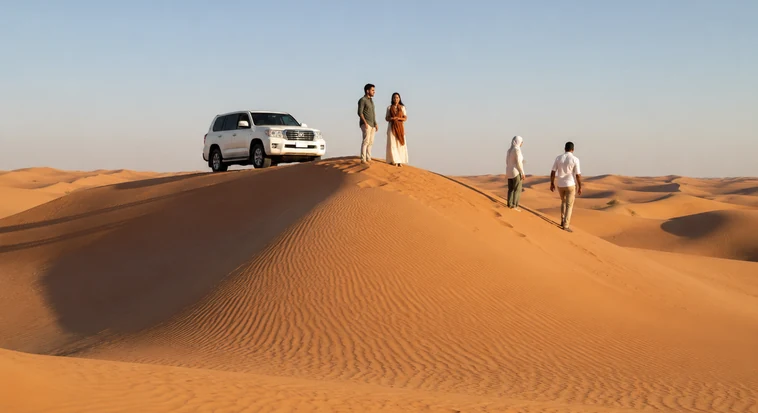
Yes, and for a genuinely different reason than most UAE desert trips. Liwa combines two things that rarely sit together: real, working palm groves and farming villages on one side, and some of the tallest sand dunes on earth, including Tel Moreeb, on the other. Beyond the landscape, it is one of the few places in the UAE where the country's own royal history is the actual draw, not a marketing line.
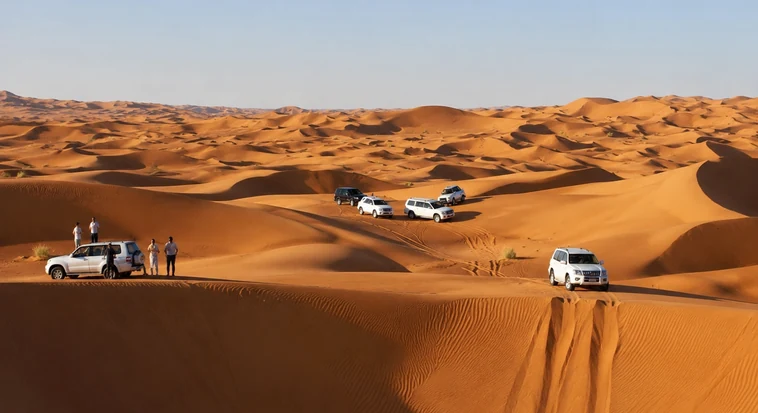
For visitors, that translates into dune bashing and sandboarding on the dune side, and camel farms, historic forts and the palm groves themselves on the oasis side, often all in the same day out.
Liwa and Al Ain are the two oases most people mean when they talk about oases in the UAE. Al Ain's oasis, a UNESCO World Heritage site, sits inland near the Omani border and is built around walkable, shaded palm groves close to the city of Al Ain itself. Liwa is the larger, more remote of the two, a genuine desert expedition rather than a city day trip, with the dune landscape as much a part of the experience as the palms.
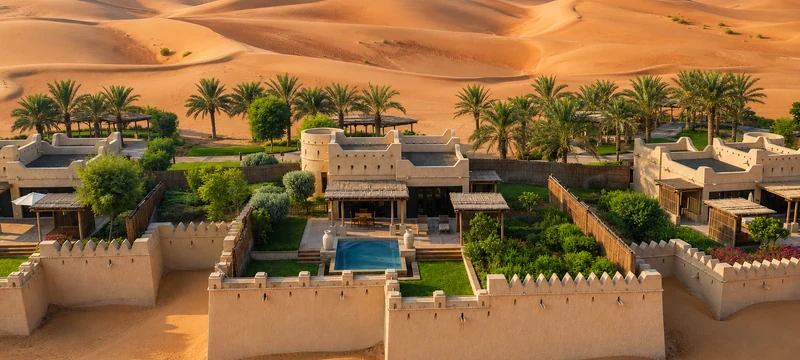
There is no strip of independent restaurants scattered through the oasis villages the way there might be in a city. Dining in Liwa mostly happens through the desert resort at Qasr Al Sarab, or as part of a guided tour, an outdoor BBQ dinner at camp, Arabic coffee and dates with your guide, or a reserved lunch at Qasr Al Sarab itself. If a proper sit down meal is the priority, pairing your visit with a tour that includes it is the more realistic route than expecting to find a restaurant strip on arrival.
A guided tour covers both sides of Liwa, the palm groves and the dunes, with transport, a guide and the permits handled.
Yes. It combines real, working palm groves and farming villages with some of the tallest dunes on earth, and it is the historical birthplace of the UAE's ruling family, a genuine landmark rather than just a scenic stop.
Dune bashing and sandboarding on the dune side, camel farms, historic forts and the palm groves themselves on the oasis side, often combined into a single guided day.
It stretches roughly 100 km east to west in a crescent along the edge of the Empty Quarter, made up of more than 50 villages with a combined population of around 20,000.
Liwa Oasis and Al Ain Oasis. Al Ain is the UNESCO World Heritage site near the city of Al Ain, walkable and shaded. Liwa is larger and more remote, with the dune landscape as much a part of the visit as the palm groves.
Not a restaurant strip in the way a city offers. Dining in Liwa mostly happens through the desert resort at Qasr Al Sarab or as part of a guided tour, an outdoor BBQ dinner, Arabic coffee and dates, or a reserved lunch at Qasr Al Sarab.