


 Destination
  Verified
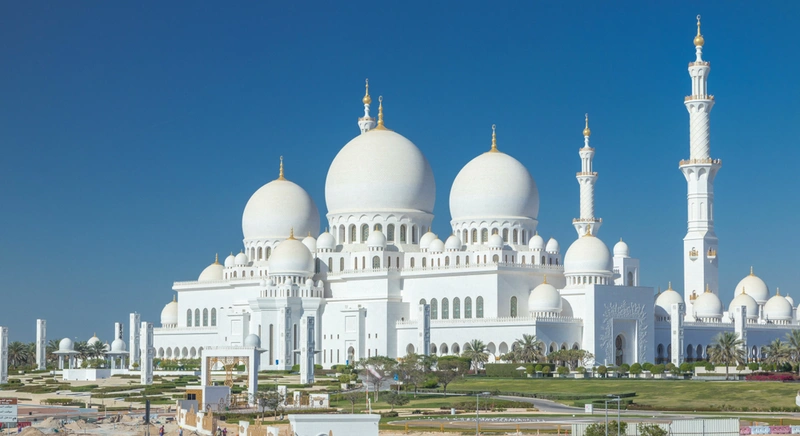
Sheikh Zayed bin Sultan Al Nahyan, the UAE's founding president, commissioned the mosque in 1996. He wanted a building that would serve both as a working place of worship and as an architectural statement of Islamic unity, incorporating design traditions from across the Muslim world rather than drawing on one regional style. He instructed the architects to source materials and expertise internationally.
Sheikh Zayed selected the location personally: a prominent site on Abu Dhabi Island between Maqta Bridge and Musaffah Bridge, visible from the main approach road from the UAE mainland. He visited the site regularly throughout construction until his death in November 2004. He is buried in the mosque's courtyard.
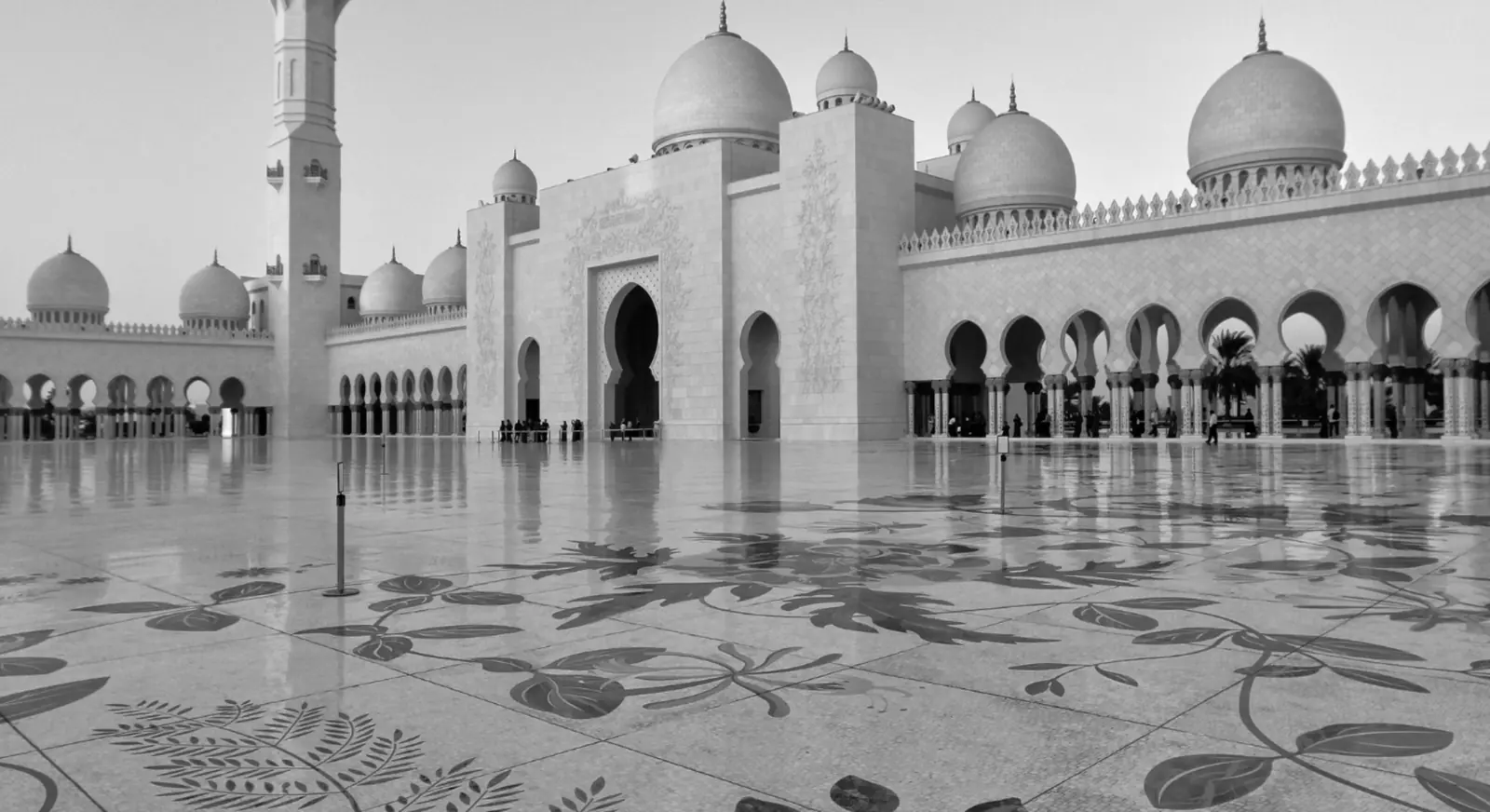
Physical construction began in 1998, two years after the commission. The delay reflects the scale of architectural planning required for a building of this complexity. The foundation phase involved significant groundwork given the site's proximity to the water table and the weight load of the marble exterior that would follow.
The primary structure, including the 82 domes, four minarets, and the main skeleton of the prayer halls and courtyard, was assembled over three years. The four minarets stand at 107 metres each. The 82 domes follow a Mughal design tradition and required specialist structural engineering to bear the load of the white Macedonian marble cladding applied in the next phase.
This was the longest and most labour-intensive phase. Every interior element was installed separately and in sequence:
The white Macedonian marble for the exterior walls, domes, and courtyard floor was quarried, cut, and transported to Abu Dhabi. Installing it across the entire exterior took several years. The marble courtyard is the single largest use of Macedonian marble anywhere in the world.
The main prayer hall carpet was woven in Iran by approximately 1,200 craftspeople over several years working in parallel. The carpet measures 5,627 square metres and weighs around 35 tonnes. It was transported to Abu Dhabi in sections and assembled inside the hall, a process that required specialist coordination given the size and weight of each piece.
The seven chandeliers in the main hall and side halls were manufactured to specification with Swarovski crystals and 24-carat gold plating. The largest chandelier hangs from 15 metres and is the world's second-largest chandelier in a religious building. Rigging and installing each chandelier at height inside the completed hall required dedicated structural work.
The 96 columns inside the main prayer hall were inlaid with mother of pearl by hand. Semi-precious stones including amethyst, lapis lazuli, and jasper were set into the wall panels and column bases throughout the building. The Qibla wall was engraved with 99 names of Allah in Kufic calligraphy.
The exterior lighting system, designed by Speirs and Major Associates, was installed during this phase. The system tracks the phases of the Hijri lunar calendar and changes the intensity and colour of the exterior illumination nightly. It received the Middle East Lighting Design Award in 2008.
Construction was completed in 2007. A period of final preparation and testing followed before the mosque opened to the public on 20 March 2008. The total construction cost was approximately 2 billion AED.
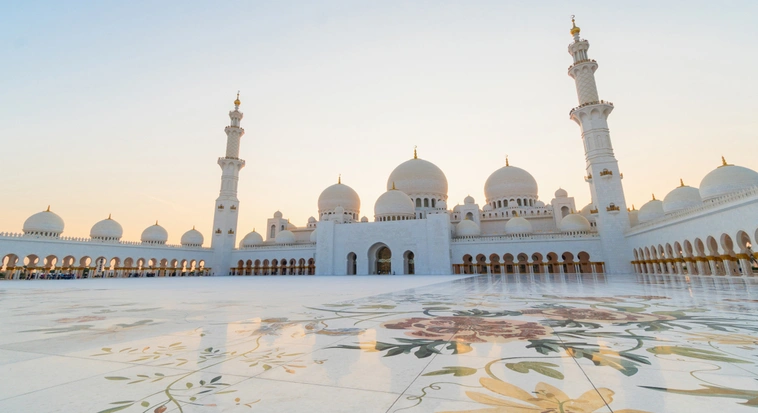
Three factors account for the length of the project. First, the scale: the building covers more than 22,400 square metres and required a workforce of over 3,000 people from 38 countries working across multiple years. Second, the custom nature of every element: nothing in the interior was mass-produced. The carpet, the chandeliers, the calligraphy, the stone inlay — each was commissioned and made to specification. Third, the sequencing: interior installation could not begin until the structure and roof were complete, which meant the two longest phases ran consecutively rather than in parallel.
Approximately 11 years. Commissioned in 1996, foundation work began 1998, main structure completed 2004, interior installation 2004 to 2007, public opening 20 March 2008.
Over 3,000 workers from 38 countries at various stages. The carpet alone involved approximately 1,200 craftspeople in Iran.
Approximately 2 billion AED, equivalent to around 545 million USD at the time of completion.
20 March 2008. Construction was complete in 2007 with final preparation taking several months before public access began.