
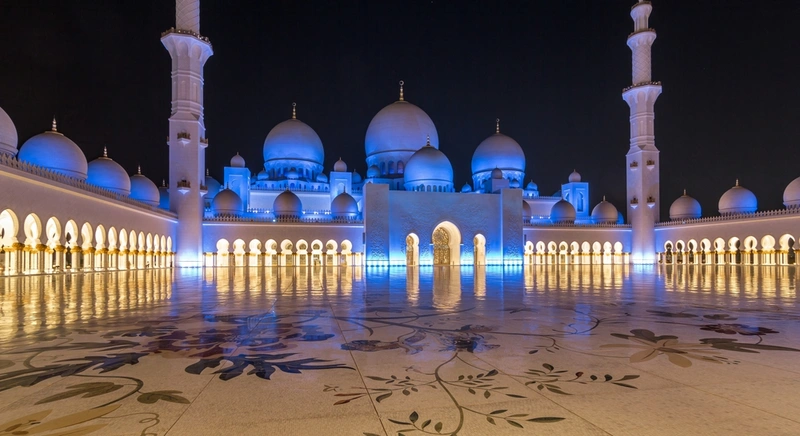


 Destination
  Verified
The mosque is open to visitors until 22:00 on most days:
The mosque closes during the five daily prayer times, including at sunset (Maghrib prayer). After prayer, the mosque reopens to visitors. The exact closure window varies by day and time of year. Plan your arrival around last admission, not closing time, and allow yourself at least 90 minutes to visit.
During Ramadan, evening hours change considerably. The mosque typically opens to visitors from around 21:30 and stays open past midnight. If you are visiting during Ramadan, verify the current hours on szgmc.gov.ae .
The white Macedonian marble that covers the mosque's exterior reflects light sharply during the day. In direct midday sun, it can be uncomfortable to look at. Later in the afternoon and into the evening, the contrast softens. Shadows from the columns become cleaner, the reflective pools work better, and the courtyard is much more comfortable to walk through at a slow pace.
From May to October, Abu Dhabi daytime temperatures regularly reach 40C or above. An evening visit in those months is simply more practical, and the mosque visit becomes something you can enjoy rather than endure.
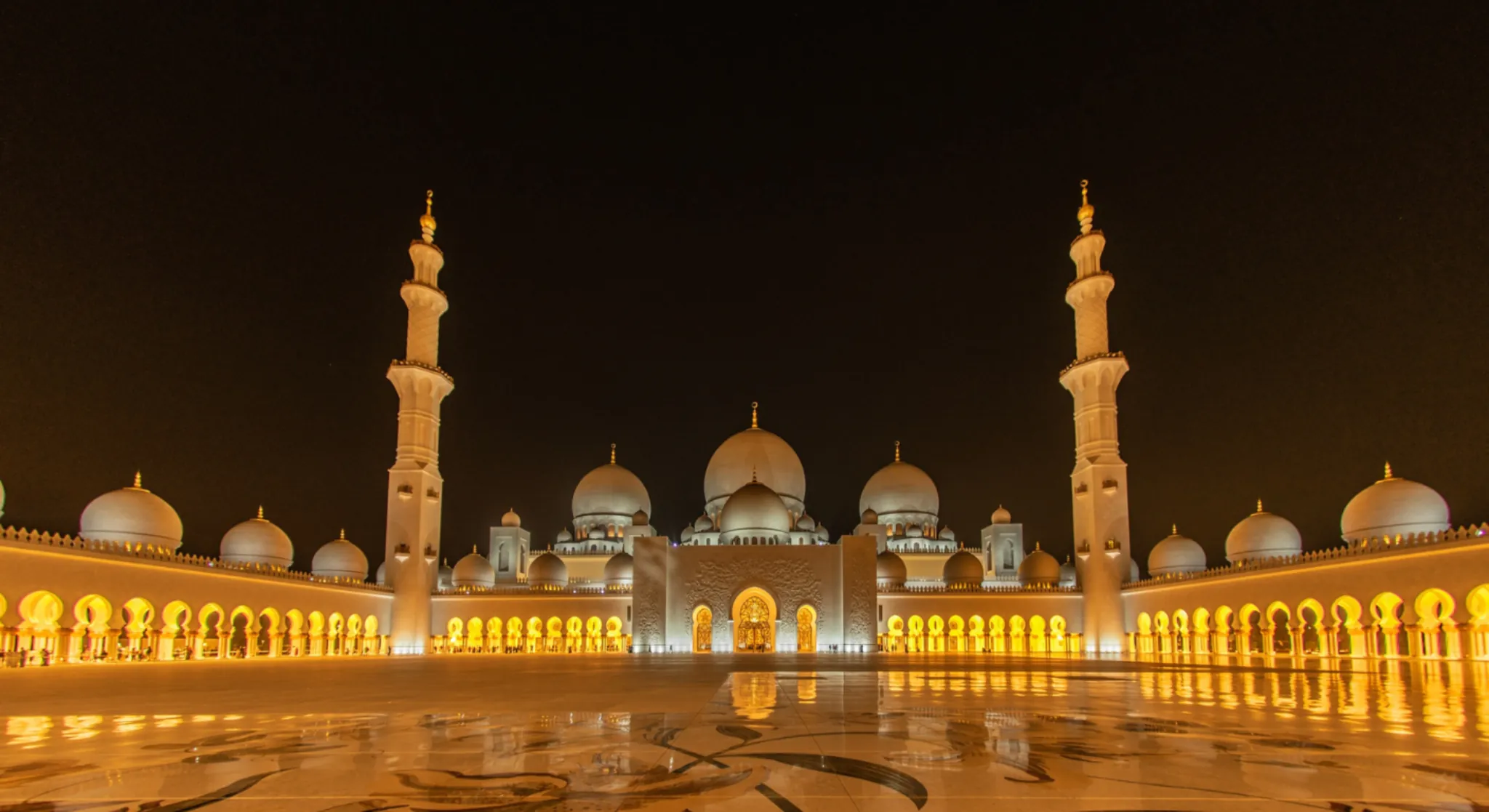
One of the most distinctive things about an evening visit is the lunar lighting. After dark, the mosque's exterior is lit by a system designed by Speirs and Major Associates that tracks the Hijri lunar calendar. Each night, the intensity and colour of the lighting changes to follow the phase of the moon.
The effect: soft blue-grey cloud patterns are projected onto the white marble exterior, both on the walls and across the domes. On a full moon night, the projection is at its brightest. On the fourteenth night of the lunar cycle, the domes turn to the darkest shade, marking the "no moon" point. The reflective pools along the exterior arcades amplify the lighting effect considerably.
This is one of the mosque's most photographed qualities, and it is only visible at night.
The most productive approach for an evening visit is to arrive 60 to 90 minutes before local sunset time. This gives you:
Arriving only after dark is still worthwhile, but you lose the transition period, which most visitors find more visually interesting than either pure daylight or pure night-time alone.
Evening is generally less crowded than midday at the mosque. Weekends (Friday evening and Saturday) are busier than weekday evenings. During peak travel season from October to March, tourist numbers are higher across all hours. If you want a quieter evening, a Tuesday or Wednesday between 18:00 and 20:00 is typically the least busy window.
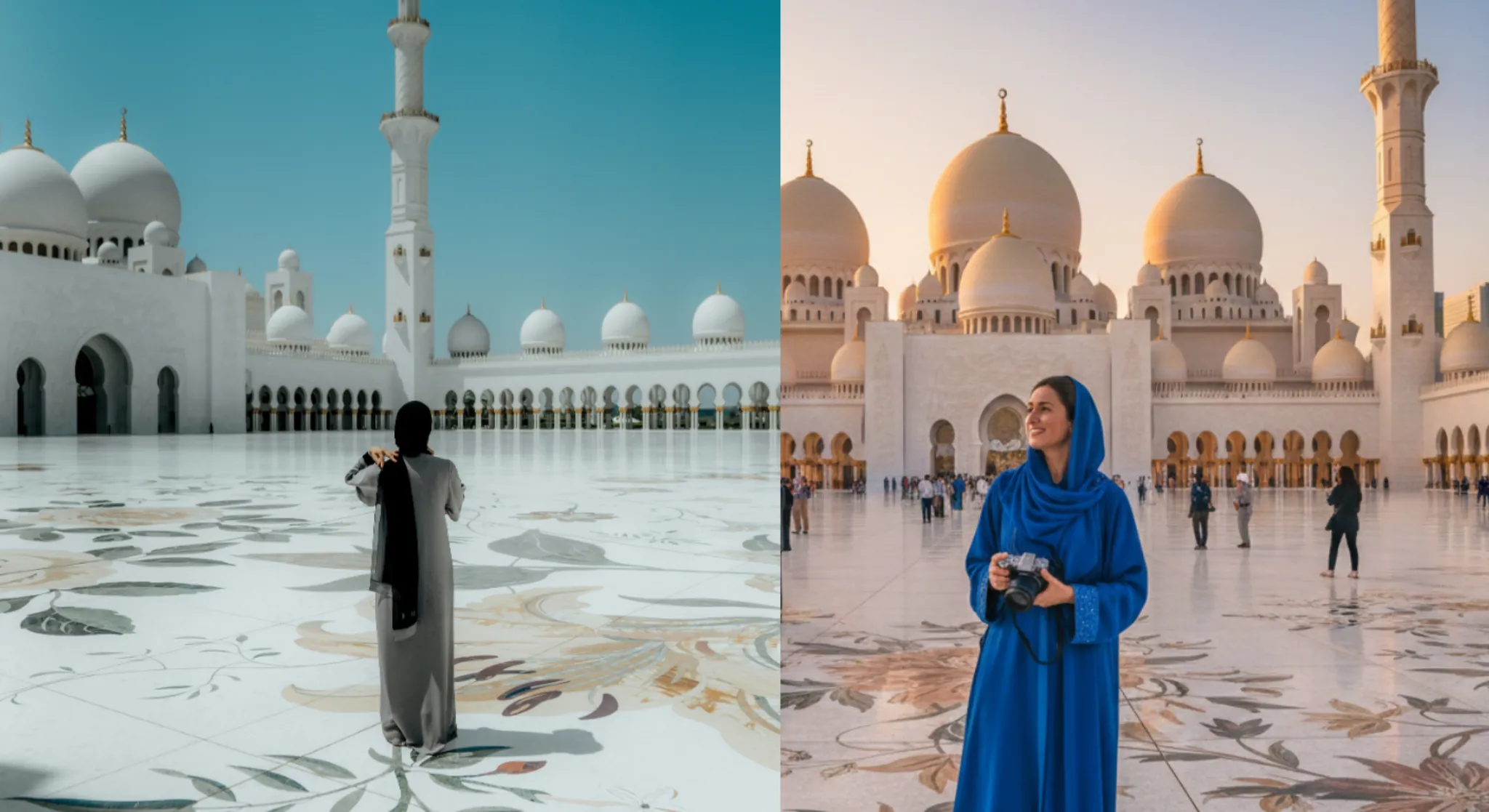
The mosque is one of the most photographed buildings in the UAE. Evening and night photography are popular, and the mosque receives many dedicated photography visitors. Personal photography is permitted in most areas. Commercial or media photography, or any organised shoot involving professional equipment, requires a permit from the Sheikh Zayed Grand Mosque Centre. Source: szgmc.gov.ae.
In the evening, the corridors tend to be quieter, which means disruptive behaviour is more noticeable. Keep movement calm, do not block the reflection pool walkways for extended periods, and do not photograph worshippers at prayer.
The dress code does not change in the evening. The same requirements apply at all visiting hours. Women must cover arms, legs, and hair. Men must wear full-length trousers. Abayas and headscarves are available at the entrance free of charge if needed.
In the cooler months from November to March, evenings in Abu Dhabi can be noticeably cool after dark, particularly indoors. A light jacket is useful, especially if you plan to stay until closing time. Wear shoes you can remove and put back on comfortably, as shoes come off before the prayer halls.
For the full dress code detail, see our mosque dress code and manners guide.
The mosque is located between Maqta Bridge and Musaffah Bridge on the southern end of Abu Dhabi Island. It is accessible by taxi, ride-hailing app, or private car. Free parking is available on site. There is an electric shuttle service within the complex, though shuttle schedules may not operate into the late evening. After 20:00, assume you are walking between the car park and the mosque entrance.
The underground walkway from the car park includes food and clothing outlets if you need to pick up appropriate attire before entering.
Yes. Sheikh Zayed Grand Mosque is open until 22:00 Saturday through Thursday, last admission 21:30. On Fridays, visitor hours are 16:30 to 22:00. The mosque closes during prayer times. Check szgmc.gov.ae for current hours.
After sunset, the lunar illumination system activates, projecting soft blue-grey cloud patterns onto the white marble exterior. The intensity changes nightly in line with the Hijri lunar calendar. The reflective pools amplify the effect. The building looks quite different at 21:00 than it does at 18:00.
60 to 90 minutes before sunset. This gives you daytime exterior photography, the transition period as light fades, and the full lunar illumination after dark. Arriving only after dark is still worthwhile, but you miss the transition.
No. The same dress code applies at all times. Women must cover arms, legs, and hair. Men must wear full-length trousers. A light jacket is useful in cooler months.